
Edo Kiriko Glass: Why It Costs More and Elevates Your Home Bar
An Edo Kiriko glass is expensive because its pattern is hand-cut into layered Japanese crystal by a trained craftsperson, not printed or molded by a machine. For a home bar, it turns a pour of bourbon, Scotch, or Japanese whiskey into a more deliberate ritual—much like serving a great bottle in a well-made decanter rather than a disposable cup.
For U.S. buyers, Edo Kiriko is best understood as collectible functional art: a traditional Japanese craft from Tokyo that can be used every weekend, displayed every day, and given as a meaningful gift for men who appreciate design and good whiskey.
Key Takeaways
- Edo Kiriko is a Japanese cut-glass tradition associated with Tokyo and the Edo period.
- The cost reflects skilled hand cutting, layered colored glass, precision, finishing, and a limited number of qualified makers.
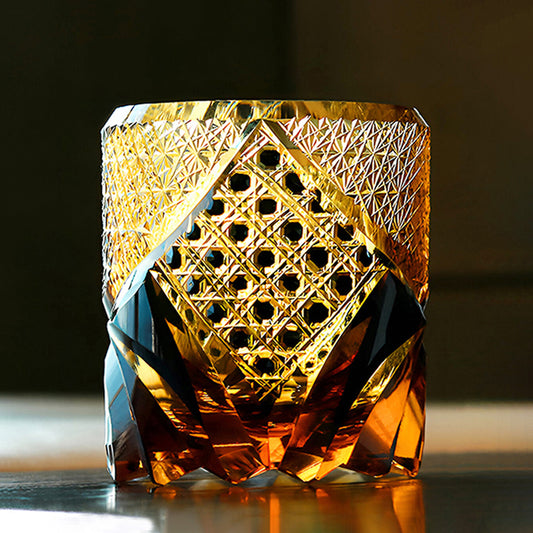
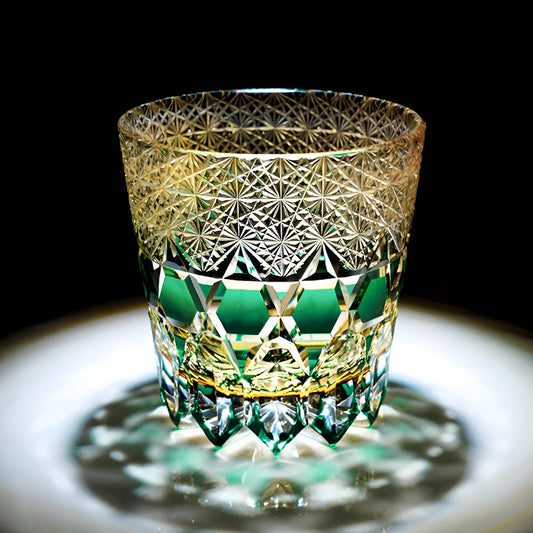
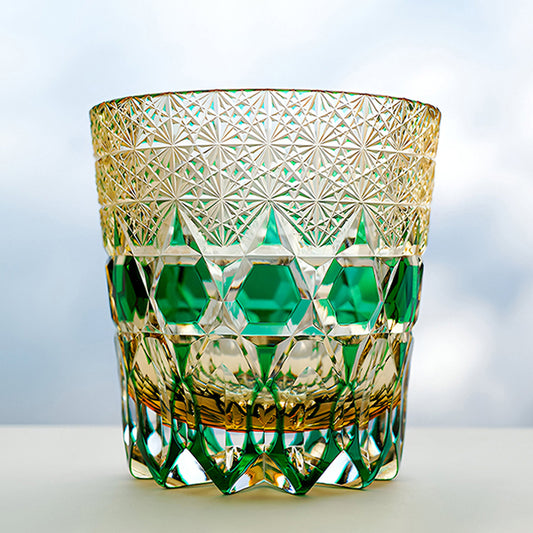
- An authentic-looking piece should reveal a contrasting color beneath the cut surface, crisp geometry, balanced weight, and clean finishing.
- Price is not determined by color alone; complexity, material, workshop reputation, and whether the piece is handmade all matter.
- For buyers who value craftsmanship, an Edo Kiriko glass can be a better long-term choice than generic crystal whiskey glasses.
Why Is the Edo Kiriko Glass Price Higher Than Ordinary Drinkware?
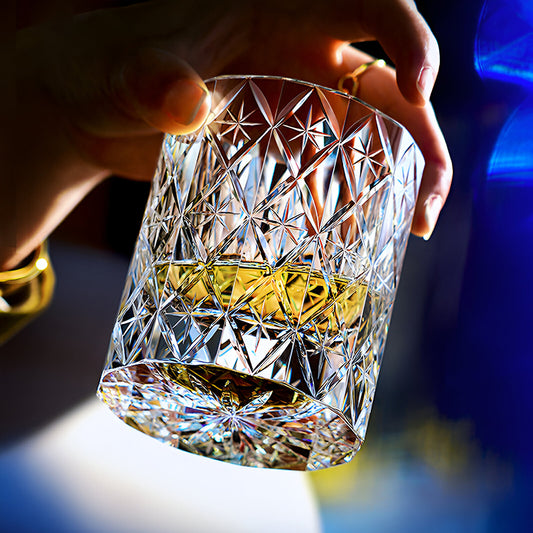
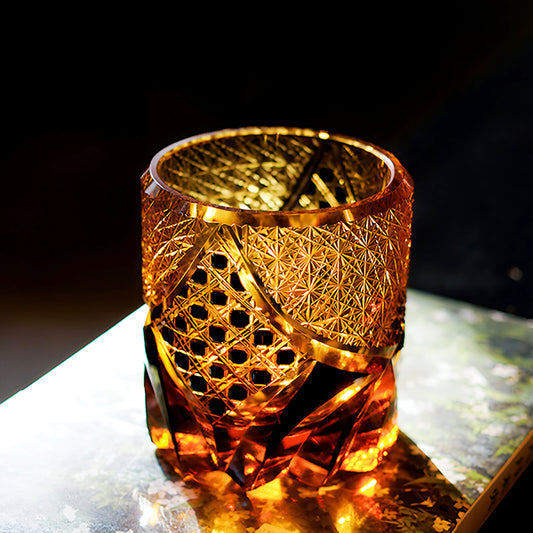
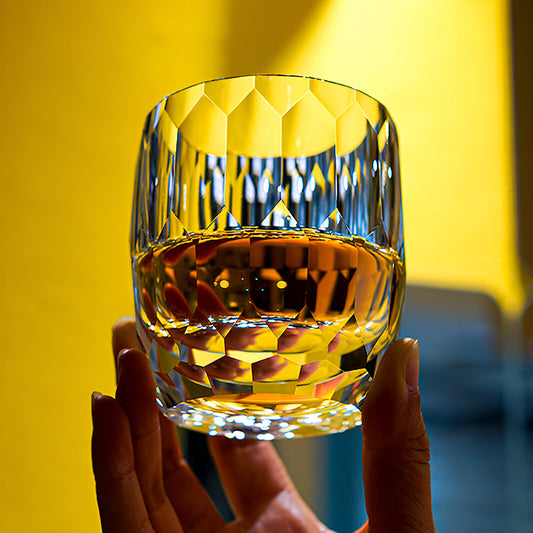
The edo kiriko glass price is usually higher than standard drinkware because the visual effect comes from removal, not decoration. A craftsperson cuts through an outer colored layer to expose clear glass beneath it. Every line, starburst, lattice, or chrysanthemum-inspired motif has to be placed with control.
Think of the difference between a printed watch dial and a hand-guilloché dial on a fine mechanical watch. Both may tell time, but one reflects concentrated human skill, careful setup, and a finish that changes as you look at it from different angles. Edo Kiriko works in a similar way: the glass catches light differently with every turn of the hand.
The process begins with a prepared blank, often made from layered glass. The artisan marks the layout, makes initial cuts with a rotating wheel, deepens and refines the facets, then polishes the surface so the pattern reads clearly. A small slip can alter a line, chip an edge, or disrupt the symmetry of a design. That risk is built into the labor.
Not every Japanese glass is Edo Kiriko, and not every cut-glass tumbler carries the same workmanship. Some lower-priced options may use simpler patterns, partially mechanized production, thinner material, or less finishing time. Those can still be attractive, but they should not be evaluated as equivalent to a carefully hand-finished piece.
What Makes Luxury Japanese Glassware Price Worth Paying for?
A luxury japanese glassware price should be judged by more than the country of origin. The useful question is: what are you actually paying for? With a quality Edo Kiriko glass, the answer is usually a combination of material, technique, design discipline, and the maker’s time.
| What you are paying for | Why it matters at home |
|---|---|
| Layered Japanese crystal or colored glass | Creates the signature contrast between the colored surface and clear cut pattern. |
| Hand-cut geometry | Gives each glass dimension, light play, and a tactile grip that molded patterns rarely match. |
| Finishing and polishing | Helps facets look crisp instead of cloudy and makes the glass feel refined in the hand. |
| Small-batch production | Means fewer identical pieces and a more personal gift or barware choice. |
| Cultural continuity | Connects your purchase to a traditional Japanese craft with roots in the Edo period. |
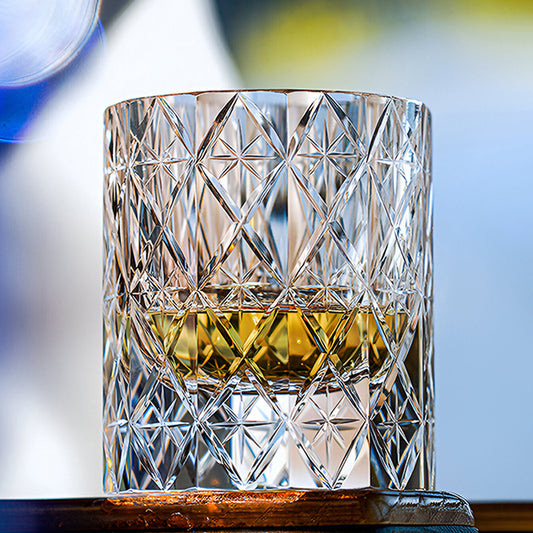
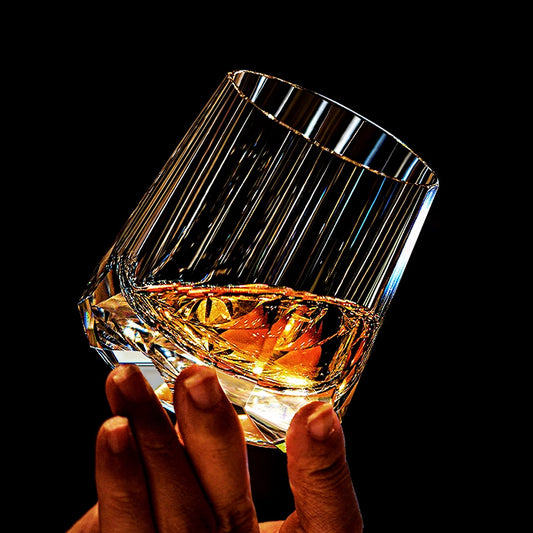
The premium is easier to justify when you will use the glass often. A well-chosen whiskey tumbler is not just shelf decor; it is part of a recurring experience. The cut pattern can make amber whiskey look warmer, while the weight and texture make a simple nightcap feel considered.
That said, expensive does not automatically mean better for every person. If you need twelve matching glasses for a large party, durable and affordable barware may be the smarter buy. Edo Kiriko is especially compelling when you want a signature glass for yourself, a pair for a couple, or a gift that carries more personality than a standard bottle accessory.
How Much Does a Japanese Whiskey Glass Cost, and What Changes the Price?
Japanese whiskey glass cost can vary widely. A simple Japanese-style cut tumbler may be comparatively accessible, while a detailed handmade Edo Kiriko piece can move into premium gift territory or beyond. Exact prices depend on the retailer, materials, origin, pattern complexity, and whether a workshop or individual artisan made the piece.
Rather than treating a single number as a rule, use price bands as a shopping framework:
- Entry level: decorative cut glass or Japanese-inspired designs with simpler production and less complex patterning.
- Premium gift level: carefully finished pieces with layered color, recognizable cut work, and a more substantial presentation.
- Collector level: intricate patterns, limited workshop output, notable makers, exceptional materials, or sets with coordinated craftsmanship.
More cuts do not always mean a better glass. What matters is clarity and balance. A busy pattern can look impressive in a product photo but feel visually crowded in person. For Japanese whiskey, bourbon, or an Old Fashioned, many buyers prefer a pattern that leaves enough clear space to appreciate the color of the drink.
Also consider the glass’s role. A single standout tumbler is a strong choice for a desk, study, or evening pour. An edo kiriko glass set makes more sense for couples, hosts, anniversaries, and gift occasions where the shared ritual matters as much as the object itself.
Is Edo Kiriko Worth It for a Home Bar or Gift for Men?
Is Edo Kiriko worth it? For someone who values handcrafted objects, Japanese whiskey, or a distinctive home bar, often yes. It is not worth it simply because it is expensive or because it looks luxurious online. Its value comes from whether the recipient will notice and enjoy the craft in real use.
It works particularly well as one of the most memorable unique whiskey glasses for men because it avoids the usual gift clichés. Instead of another generic flask, novelty decanter, or branded accessory, it gives the recipient something useful with a visible making story.
Choose an Edo Kiriko gift when the person enjoys one or more of the following:
- Whiskey tastings, home bartending, or a carefully built bar cart
- Japanese design, travel, architecture, or traditional craft
- Objects with texture, weight, and detail rather than obvious logos
- Host gifts, milestone birthdays, Father’s Day, weddings, or business gifts
- A slower, more intentional drinking ritual
It may be less suitable for someone who wants dishwasher-safe everyday glasses, prefers minimal maintenance, or needs a large uniform set for frequent entertaining. Handmade or finely cut glass deserves gentler care, and that is part of owning it.
How Does Edo Kiriko Compare With Other Crystal Whiskey Glasses?
Most crystal whiskey glasses improve the drinking experience through clarity, weight, and presentation. Edo Kiriko adds a distinct visual language: precise cut patterns that reveal color contrast and reference a Japanese design tradition.
| Option | Best for | What to expect |
|---|---|---|
| Standard crystal tumbler | Everyday entertaining | Classic weight and clarity; usually easier to match and replace. |
| Mass-produced patterned glass | Budget-friendly visual impact | Decorative surface treatment, often with less depth and individuality. |
| Edo Kiriko glass | Premium home bar, meaningful gifts, design collectors | Hand-cut facets, layered color contrast, traditional Japanese craft value. |
| Whiskey tasting glass | Aroma-focused sipping | Shape prioritizes nosing and concentration over decorative cut work. |
There is no universal winner. A nosing glass may be better for analyzing a rare single malt, while an Edo Kiriko tumbler can be better for the emotional side of drinking: the ice, the color, the light, and the feeling of holding an object that took skill to make.
If you are building a bar with a point of view, combine both. Keep a few practical everyday tumblers and add one or two Edo Kiriko pieces for the pours and guests that deserve extra attention.
What Should You Look for Before Buying an Edo Kiriko Glass Set?
Before buying, focus on product-specific facts rather than broad claims. Confirm the dimensions, capacity, care instructions, number of glasses included, and the details the seller can document about materials and production.
- Pattern: Choose a design you will still like after the novelty fades. Geometric cuts often suit modern home bars; floral-inspired cuts can feel more celebratory.
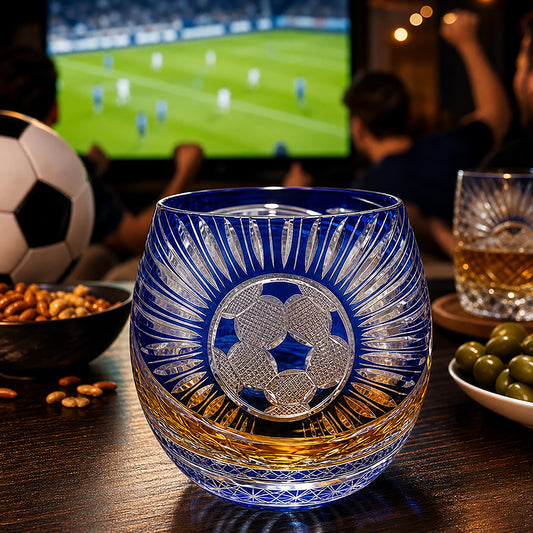
- Color: Deep blue, ruby, black, and clear styles each interact differently with whiskey and room lighting.
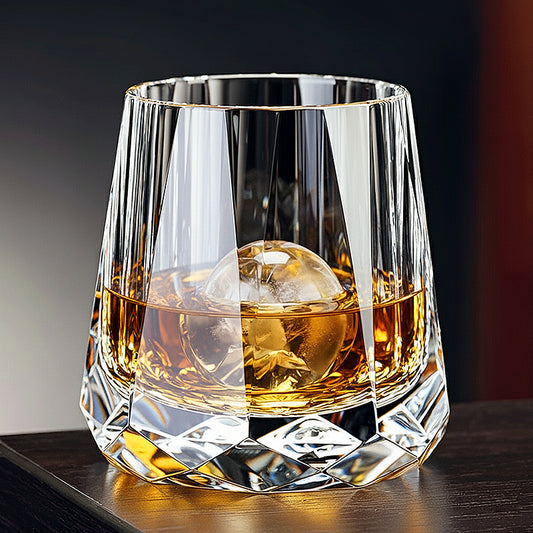
- Capacity: A smaller glass suits neat pours; a wider tumbler is more flexible for large ice cubes and cocktails.
- Cut quality: Look for sharp-looking facets, consistent spacing, and polished surfaces in close-up images.
- Care: Follow the seller’s guidance. Fine cut glass is generally better hand-washed with mild soap and a soft cloth.
- Gift presentation: Confirm whether the item includes a box or protective packaging, especially when giving it as a premium gift.
For a curated starting point, Browse crystal whiskey glass sets that fit a home-bar or gifting occasion. If your priority is pairing the glass with Japanese whisky culture, Discover Japanese whiskey glasses designed for a more intentional pour.


FAQ: Edo Kiriko Glass Price, Value, and Care
Why is the Edo Kiriko glass price so different from one piece to another?
Prices vary with the material, amount of hand cutting, pattern complexity, finishing, maker or workshop, production volume, and presentation. A simpler piece can still be beautiful; a higher price should correspond to clear craftsmanship or documented rarity.
Is Edo Kiriko worth it if I mostly drink bourbon rather than Japanese whiskey?
Yes, if you enjoy the experience of the glass itself. Edo Kiriko works well with bourbon, rye, Scotch, cocktails, and nonalcoholic drinks. The value is in the tactile and visual ritual, not a requirement to drink Japanese whiskey.
What is a reasonable Japanese whiskey glass cost for a gift?
A reasonable budget depends on the occasion and how handmade the item is. Start by deciding whether you need one signature glass, a pair, or a full set, then compare material details, care guidance, and seller documentation instead of shopping by price alone.
Are Edo Kiriko glasses real Japanese crystal?
Some products use crystal or crystal-style layered glass, while specifications vary by maker and retailer. Check the individual listing for the exact material rather than assuming every Edo Kiriko-style glass has the same composition.
Can I put an Edo Kiriko glass in the dishwasher?
Hand washing is the safer default unless the seller specifically states that the item is dishwasher safe. Use lukewarm water, mild soap, and a soft cloth; avoid abrasive scrubbers and sudden temperature changes.
What makes an Edo Kiriko glass a good gift for men?
It combines utility with craft. It is useful for whiskey or cocktails, but it also signals taste, attention to detail, and appreciation for a traditional Japanese craft—qualities that make it more memorable than a generic bar accessory.
Final Thought: Buy the Craft You Will Actually Use
Edo Kiriko is expensive because it represents more than a colored tumbler: it is a precise, labor-intensive expression of Tokyo glassmaking that developed from the visual culture of the Edo period. For the right buyer, that craft is not an abstract idea—it is visible every time light moves across the cut surface.
If you want Japanese barware that feels personal, useful, and gift-worthy, choose a pattern, size, and color that fit the way you actually drink. A thoughtfully selected Edo Kiriko glass can make an ordinary pour feel like a small occasion.
Explore Our Collection
Ready to experience the world of Edo Kiriko glass? Browse our curated collection:
Disclaimer: This article is for informational purposes. Products and pricing subject to change.