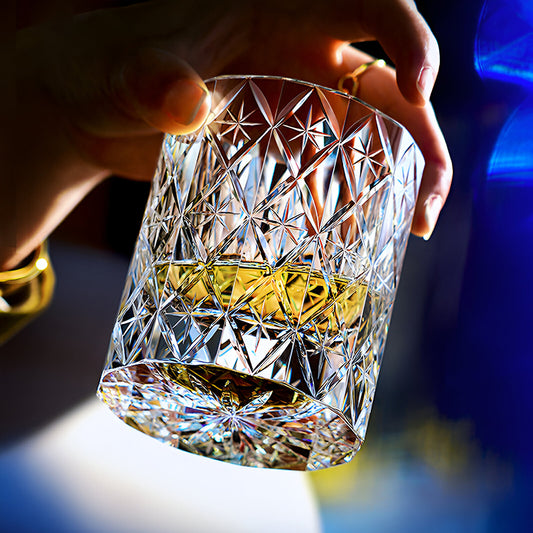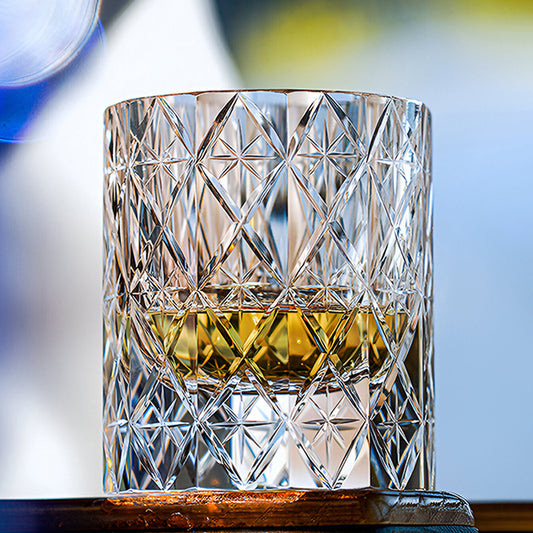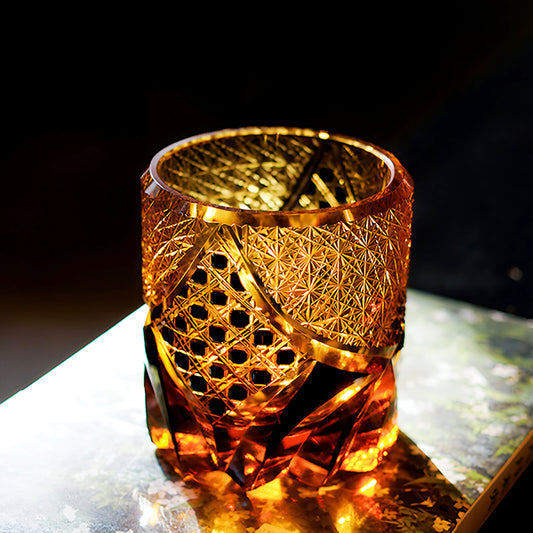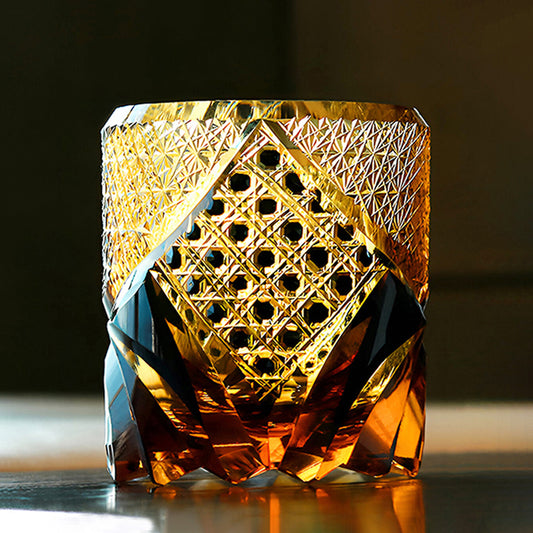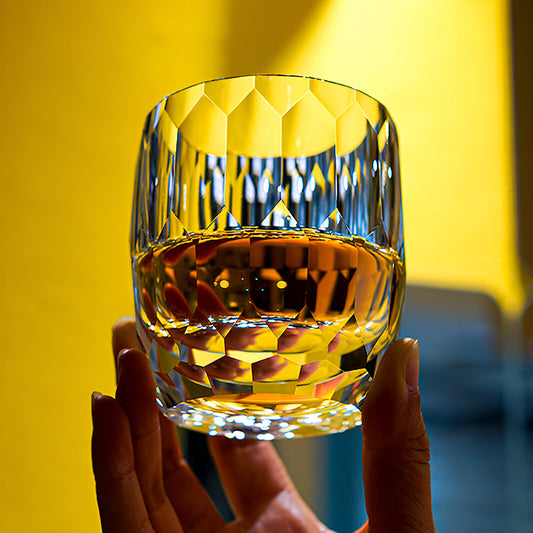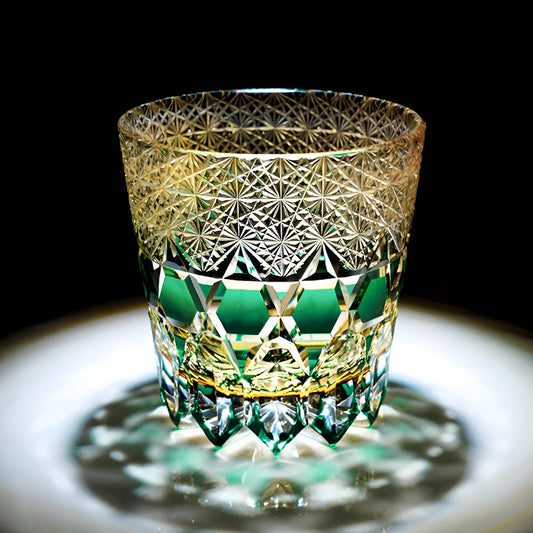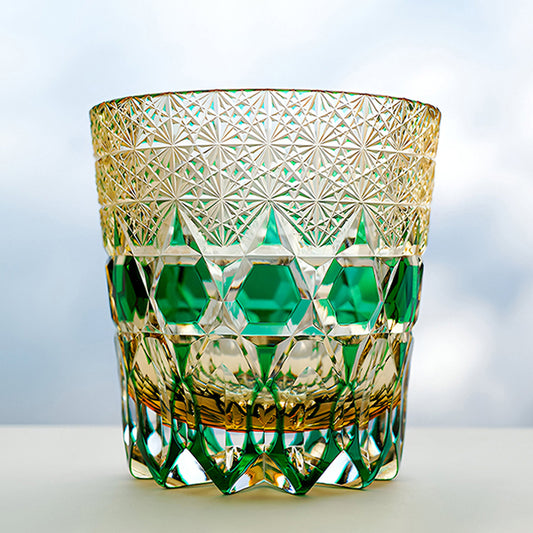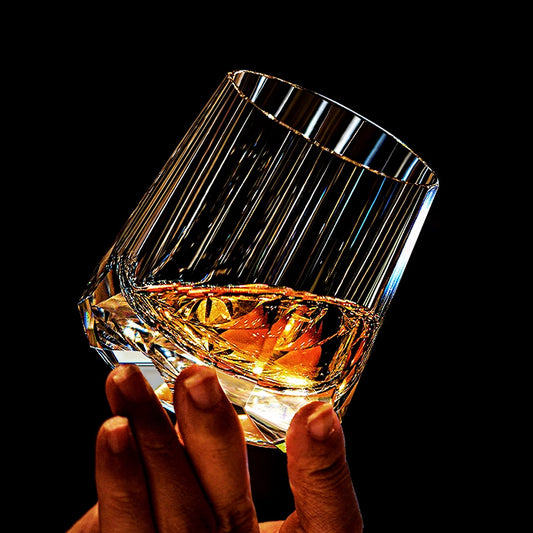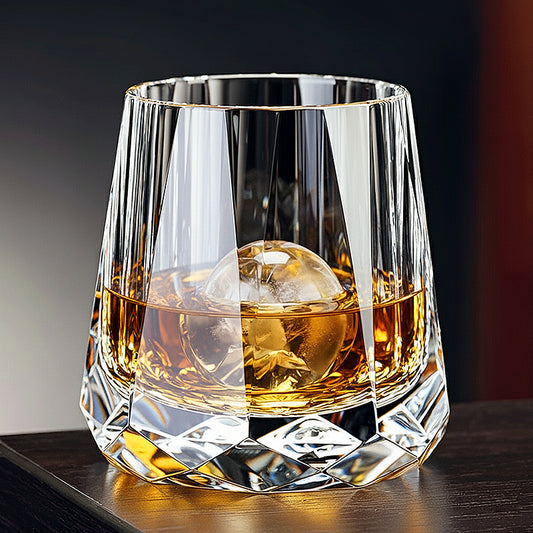


Authentic Edo Kiriko glass always feels slightly heavy for its size, bears tiny “cutter marks” at pattern intersections, and never uses glue-on gems. Those $30 “Edo-style” glasses at souvenir shops are almost certainly machine-cut or acid-etched imitations. True Edo Kiriko is carved by hand, layer by layer, in Tokyo workshops that trace their craft back to the 19th century. In this guide, you’ll learn exactly what to look for—and what to walk away from—so you can buy a piece of living Japanese art with confidence.
Key Takeaways
- Real Edo Kiriko is hand-cut, not pressed or acid-etched.
- Look for subtle “tool marks”—tiny parallel lines in cuts—not polished-smooth grooves.
- The base glass is crystal or soda glass, often with a colored over-layer (iro-kiriko) that reveals clear glass underneath.
- Authentic pieces rarely cost under $80–$100 for a simple rocks glass; cups start around $150+.
- Traditional patterns (nanako, yarai, asanoha) follow strict geometry and are never randomly placed.
- True Edo Kiriko workshops are concentrated in Tokyo’s Edogawa and Sumida wards; many offer stamped certificates.
What is Edo Kiriko Glass?
Edo Kiriko is a style of cut glass that originated in Edo (present-day Tokyo) during the final years of the Edo period (1830s). The name marries “Edo” (the old capital) with “kiriko,” meaning cut glass. Think of it like a tailored Savile Row suit: the raw material is fine, but the value is all in the hand-cutting.
Artisans use rotating grinding wheels and abrasive stones to carve geometric patterns into the surface of layered glass. Often, a thin colored glass (red, blue, green) is fused over clear crystal—when cut, the clear layer peeks through, creating a striking contrast. There’s also colorless kiriko called “sukashi,” but colored over-layer is what most people picture. The craft is recognized as a Traditional Craft of Japan by the Ministry of Economy, Trade and Industry.
Why Authenticity Matters
Buying a fake isn’t just about wasted money—you miss the tactile, optical, and cultural experience that makes Edo Kiriko special. A real piece plays with light differently: the hand-cut facets scatter it like a prism, while machine-stamped fakes look flat and lifeless.
On the collector’s side, genuine works from named studios (Kimura Glass, Hirota Glass, or independent masters) hold value and can be passed down. Counterfeit pieces, often mass-produced in Southeast Asia or China and labeled “Japanese style,” carry none of that heritage. Knowing how to tell them apart also protects the Tokyo artisans whose families have been cutting glass for six or seven generations.
Who Should Buy Authentic Edo Kiriko?
- Whiskey and cocktail enthusiasts – The faceted interior and exterior of a real rocks glass aerates spirits beautifully, and the weight feels balanced in hand.
- Home hosts who value conversation pieces – A set of Edo Kiriko tumblers on a bar cart sparks instant curiosity.
- Collectors of Japanese art and craft – Look for signed pieces with studio marks; limited-edition seasonal patterns exist.
- Gift-givers seeking meaning – In Japan, kiriko is a traditional wedding or milestone gift. An authentic piece says “I cared enough to find the real thing.”
- Not for the everyday rough-and-tumble kitchen – If you need unbreakable dishwasher-safe tumblers, choose something else. Edo Kiriko demands hand washing and care, though it’s surprisingly durable.
6 Telltale Signs of Real Edo Kiriko
1. Hand-Cutter Marks (The “Chisel” Sign)
Genuine cuts show microscopic, parallel scratch lines inside the grooves left by the rotating abrasive wheel. Hold the glass up to side light; fakes made in a mold or etched with acid have perfectly smooth, polished grooves with zero internal texture. The artisan’s wheel can’t achieve a mirror finish—and it shouldn’t.
2. Pattern Symmetry and “Breathing Room”
Traditional patterns like yarai (lattice) or nanako (fish roe) are mathematically spaced, but hand-cutting means slight variations exist. A completely perfect, computer-aligned grid suggests machine production. Real kiriko also respects “ma”—negative space; cuts never crowd the entire surface. The bottom typically retains a clear, uncut band (called “fukuro”) for balance.
3. Color Application: Iro-Kiriko Layer Test
In colored over-layer pieces, the color “peels away” to reveal the transparent body. Run a fingernail gently along the edge of a cut—genuine blown glass with overlay feels like two fused layers, not a painted or dipped coating that chips. Fakes often spray or dip color after shaping, which can leave uneven pooling or bubbles at the base.
4. Weight and Sound Signature
Edo Kiriko uses lead crystal or high-grade soda glass with a noticeable heft. Flick the rim with your finger: it should emit a long, clear “sing,” not a dull thud. Cheap glass sounds flat. The base should also be thick enough to feel substantial but not clunky—balance matters.
5. Origin Marks and Studio Stickers
Look for a small engraved “Japan” or studio seal near the base—often in katakana or a stylized mark. Many Tokyo workshops add a paper sticker (with the artisan’s hanko) on new pieces. If you’re buying in person, ask for the certificate of authenticity; high-end retailers like Takashimaya or direct studios include one. No mark at all is a red flag, though older vintage pieces might have worn-off stickers, so cross-check other signs.
6. Price as a First Filter
Real Edo Kiriko is labor-intensive. A single small “guinomi” sake cup takes a day or more to cut. Expect entry-level genuine pieces around $100–$150 for a simple clear rocks glass, climbing quickly for colored, intricate patterns. If a set of six “Edo Kiriko” tumblers costs $60, you’re looking at machine-made import glass.
Comparison Table: Real vs Fake Edo Kiriko
| Feature | Authentic Edo Kiriko | Fake / Imitation |
|---|---|---|
| Cutting method | Hand-cut with rotating stone wheels | Machine-pressed mold or acid-etch |
| Tool marks | Fine parallel scratches in grooves | Smooth, mirror-like grooves |
| Pattern precision | Near-perfect but with subtle human variation | Perfectly uniform, often too “clean” |
| Color layer | Fused colored glass overlay, clear beneath | Painted, spray-coated, or very thin veneer |
| Sound | Long, clear ring when flicked | Dull thud |
| Weight | Hefty for size | Often lighter, thinner |
| Origin mark | Engraved “Japan” or studio seal | Missing, generic, or “Japan Style” |
| Price (rocks glass) | $100–$300+ | $10–$40 for a set |
Common Fakes to Watch For
- Acid-etched “Kiriko style” from China or Thailand – Sold online as “Japanese cut glass.” Patterns appear soft-edged, shallow, and uniform; no wheel marks.
- Sticker fraud – Genuine-looking “Edo Kiriko” stickers slapped on machine-made goblets. Peel back the sticker; if there’s no engraved mark underneath, be suspicious.
- Vinyl-decal fakes – A printed colored pattern sits on the surface. You can feel the raised edges with a fingernail, and it’ll peel or wear off with use.
- Thermochromic or painted “old look” – Faked “ancient” Edo Kiriko where colorant is applied after cutting to mimic age patina. Real vintage pieces might have slight wear but never a coating that scratches off.
Real-Life Scenarios: When Authenticity Counts
Imagine you’re pouring Yamazaki 18 for a friend. With a real Edo Kiriko rocks glass, the amber spirit glints through the carved lattice—the glass almost disappears where cuts meet light. Now picture a fake: the light goes through flat, the color looks painted on, and the glass clinks like a dorm-room cup. That moment of beauty? Gone.
Or consider a wedding gift. Present an authentic pair of Edo Kiriko sake cups with their signed guarantee, and you’re giving a story—a Tokyo artisan’s fingerprint on every facet. Try that with a boxed set from a no-name Amazon seller, and it’s just glassware.
Buying Guide: Where to Get the Real Deal
- Direct from Tokyo workshops – Studios like Kimura Glass and Hirota Glass sell online and ship internationally. They provide authenticity certificates.
- Japanese department stores (online) – Takashimaya, Isetan, and Mitsukoshi curate certified crafts. Look for the “Traditional Craft” logo.
- Specialized retailers in the US – Shops like Musubi Kiln, Japan Objects, or select museum stores carry vetted pieces.
- Vintage and secondhand – eBay, Etsy, or Japanese auction sites like Yahoo! Auctions Japan. Filter for sellers who show maker marks and can detail provenance. Be extra diligent with photos of tool marks.
- Red flags online – Phrases like “Japanese style,” “Kiriko design,” or “delicate cut glass” without any mention of Tokyo or artisan names. Prices that seem too good to be true.
Care Tips to Preserve Your Edo Kiriko
- Hand wash only with mild detergent; never put in dishwasher—the high heat and abrasives dull the cuts over time.
- Rinse immediately after use if you’ve served whiskey or sake; lingering alcohol can etch the surface of crystal glass.
- Store in a padded glass cabinet or with soft cloth between stacked pieces.
- Avoid thermal shock: don’t pour boiling water directly into a kiriko cup; let it warm gradually if making hot sake.
- Polish gently with a microfiber cloth to keep the facets sparkling. The more you handle it, the more the cut edges develop a subtle silky patina—a sign of a well-loved piece.
Conclusion: The Cut That Connects Centuries
Real Edo Kiriko isn’t just drinkware; it’s a portal to Tokyo’s craft heritage—where the sound of grinding wheels still hums in Sumida workshops. Now that you know the sharp clues—cutter marks, color fusion, heft, and price—you can confidently separate a museum-worthy piece from a tourist-shop decoy. Whether you’re curating a home bar or hunting for a meaningful gift, let your fingers find the vibration of handwork. That’s where the beauty lives.
Ready to start your collection? Explore our curated selection of certified Edo Kiriko glassware, each piece signed by the artisan and shipped directly from Tokyo. Discover Authentic Edo Kiriko.
Explore Our Collection
Ready to experience the world of Edo Kiriko glass? Browse our curated collection:
Disclaimer: This article is for informational purposes. Products and pricing subject to change.