

Real vs Fake Edo Kiriko Glass: How to Identify Authentic Japanese Cut Glass
You can tell real Edo Kiriko by its sharp, precise cuts, a fine mist-like “suriaged” texture on the base, and tiny imperfections that reveal human handwork. Machine-made imitations lack the depth, irregular sparkle, and hallmark micro-scratches of true Tokyo cut glass.
Edo Kiriko is not just a pretty glass; it's a whisper from Japan's Edo period (1603–1868), reimagined by modern artisans in Tokyo. Owning a piece means holding a story of fire, wheel, and decades of mastery. But as demand grows, so do counterfeits. Here’s how to be sure yours is real.
What Is Edo Kiriko Glass?
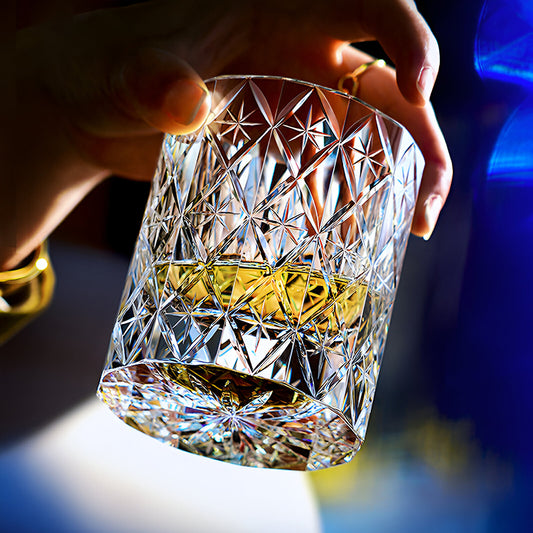
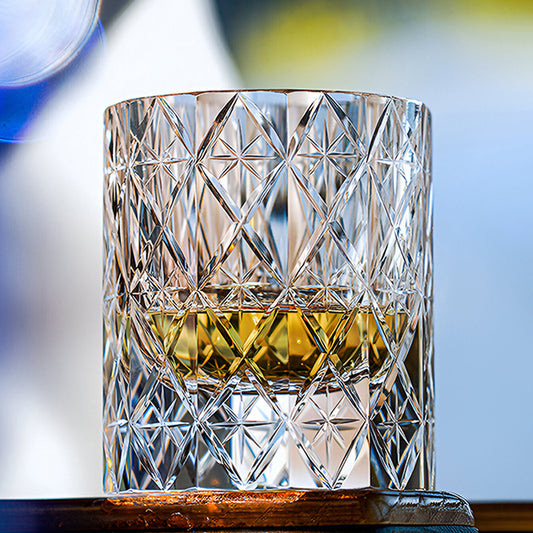
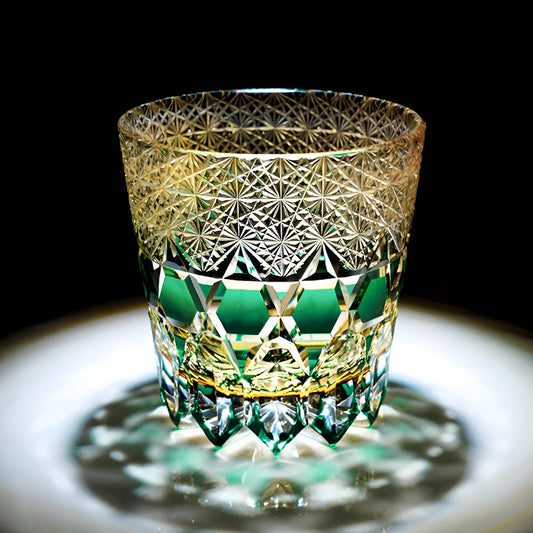
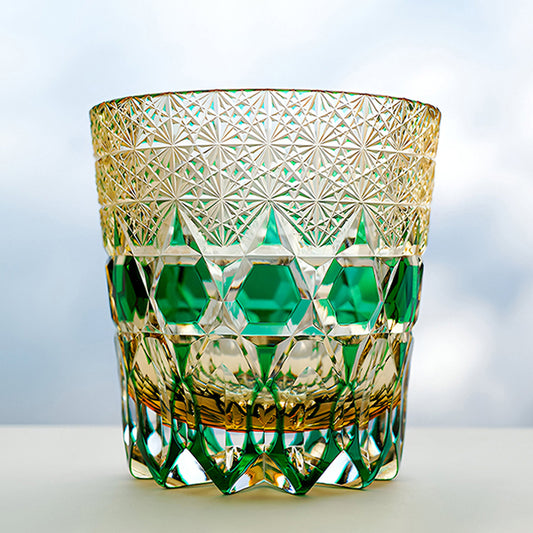
Edo Kiriko is a traditional Japanese craft of hand-cut glass that originated in Edo (present-day Tokyo) during the late Edo period. Artisans use grinding wheels and natural stone to carve intricate geometric patterns—think chrysanthemums, hemp leaves, or lattice—into clear or colored crystal glass. The result is a dazzling interplay of light and shadow that feels at once classic and contemporary.
The craft nearly vanished after the Meiji Restoration but was revived in the 20th century using lead crystal for clarity and brilliance. Today, genuine Edo Kiriko is still produced in small Tokyo workshops, often by craftspeople designated as living cultural treasures.
Why Authenticity Matters
A real Edo Kiriko glass is a functional piece of Japanese heritage. It carries the soul of the artisan—every cut reflects years of training. Fakes, often mass-produced in molds, strip away that soul. Beyond emotional value, authenticity matters for:
- Investment: Authentic pieces hold or increase in value; fakes have no resale market.
- Performance: Real Edo Kiriko glass is made from high-quality crystal that sings when flicked and feels substantial in hand.
- Cultural respect: Buying genuine supports living artisans and a 200-year-old craft in Tokyo.
Key Benefits of Owning Real Edo Kiriko
- Unmatched optical brilliance: The precise cuts create a kaleidoscope of colors in sunlight, far beyond what a machine can mimic.
- Tactile satisfaction: Run your thumb over the surface—authentic cuts feel crisp, slightly sharp, never waxy or smoothed over.
- Conversation piece: Serve whiskey, sake, or even water and watch guests marvel at the glass before the drink.
- Sustainability: One handcrafted cup, cared for well, lasts generations; a fake ends up in a landfill within years.
Telltale Signs of Authentic Edo Kiriko
Here are the markers you can spot even without a magnifying glass.
- Sharp, crisp cuts: Real Edo Kiriko patterns have a precise, almost mathematical sharpness. Fakes made by pressing or acid-etching will show rounded edges, blobby corners, or lack of depth.
- Suriaged (misty) base: The bottom of the glass usually has a frosted, finely scratched texture where the artisan ground it flat. This “suriaged” finish feels like powdered stone, not sticky or glossy. Many fakes have a polished, glossy bottom or no frosting at all.
- Micro–imperfections: Look for tiny, nearly invisible wheel marks, slight asymmetry, or a faint cut that varies in depth. Hand-cut means no two glasses are identical—this is the fingerprint of the maker.
- Weight and ring: Authentic Edo Kiriko, often lead crystal (24%+ PbO), feels heavier than expected for its size. Tap it lightly; a real piece emits a clear, prolonged bell tone. Fakes in soda-lime glass give a dull thud.
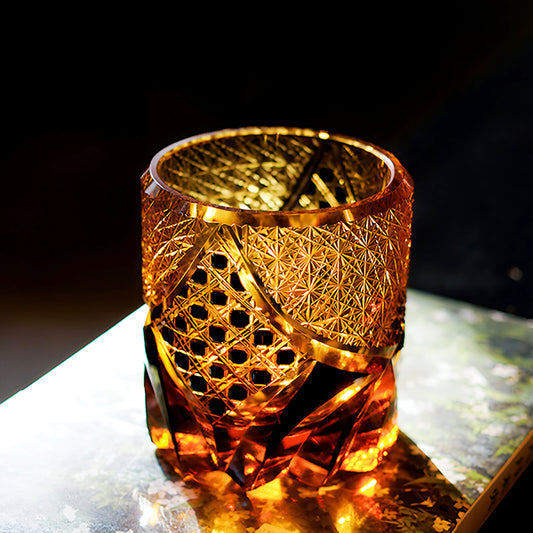
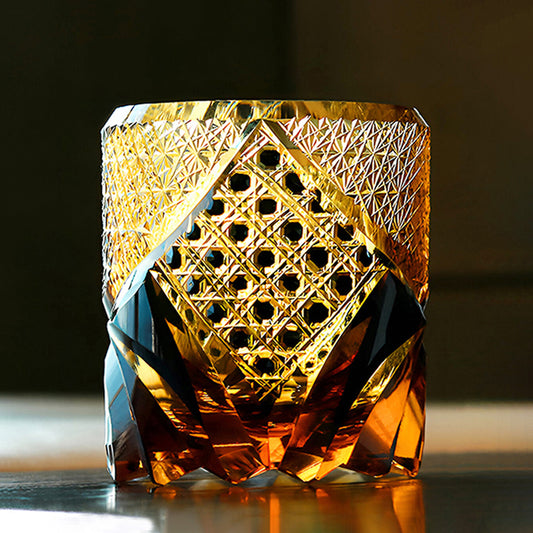
- Color saturation: Traditional “iro-kiriko” uses a thin layer of colored glass cased over clear crystal, then cut away to reveal clear pattern. In fakes, the color may be painted or sprayed on and lacks the layered depth.
- Maker’s mark or signature: Not all, but many authentic pieces bear a small engraved signature or sticker from a recognized Tokyo workshop (e.g., Kimura, Horiguchi, Hara). If a sticker just says “Made in Japan” with no artisan info, be wary.
Common Fakes and How to Spot Them
Counterfeit Edo Kiriko usually falls into three buckets:
- Machine-pressed glass: Made in a mold, these often copy classic “nanako” (fish roe) or “kiku” (chrysanthemum) patterns. The cuts look uniform, lifeless, and the interior often shows faint mold seams. Price is often too good to be true (under $30).
- Acid-etched imitations: Acid eats away the surface to create a matte pattern. It feels smooth, not crisp. Under a magnifier, the “cuts” lack the parallel wheel marks of grinding.
- Overseas copies labeled “Edo Kiriko style”: Glassware made in China or Southeast Asia that borrows patterns but skips the traditional layered glass technique. They rarely use lead crystal and won't have the suriaged base. Check the country of origin on the box.
Real vs. Fake Edo Kiriko: Quick Comparison
| Feature | Real Edo Kiriko | Fake / Imitation |
|---|---|---|
| Material | Lead crystal (heavy, brilliant) or high-quality clear glass | Soda-lime glass (light, less sparkle) |
| Cut edges | Sharp, precise, may feel slightly abrasive | Rounded, smooth, or waxy |
| Base | Frosted “suriaged” ring, fine scratches | Glossy, polished, or coarsely sanded |
| Pattern depth | Deep, multi-layered, with internal reflections | Shallow, flat, often painted look |
| Sound | Clear, long ring | Short, dull thud |
| Imperfections | Subtle tool marks, slight asymmetry welcome | Perfectly symmetrical, no marks |
| Price (guide) | $80–$500+ for a tumbler | $10–$40 |
Where to Buy Authentic Edo Kiriko
Trust comes first. Here are reliable channels:
- Tokyo ateliers directly: Visit workshops in Sumida or Edogawa wards if you’re in Japan. Many masters sell straight from their studio.
- Department store exhibitions: Stores like Mitsukoshi or Isetan often host certified kiriko artisans.
- Curated online retailers: Look for sellers who list the artist’s name, workshop location, and provide a certificate of authenticity. (Browse our Edo Kiriko collection—every piece comes with a maker card and authenticity guarantee.)
- Museum shops: The Tokyo National Museum and Edo‑Tokyo Museum occasionally stock genuine pieces.
Who Should Buy Edo Kiriko?
- Whiskey and spirits lovers: The textured cuts enhance the aroma and the heavy crystal elevates every sip.
- Japanophile collectors: A tangible piece of Tokyo’s living heritage that appreciates in value.
- Newlyweds: A pair of Edo Kiriko sake cups makes a meaningful, long-lasting wedding gift.
- Design aficionados: The blend of traditional motif and modern simplicity fits any refined table.
- Souvenir seekers: Ditch the generic magnet; this is a souvenir that whispers “Japan” every day.
Real-Life Scenarios: When Edo Kiriko Shines
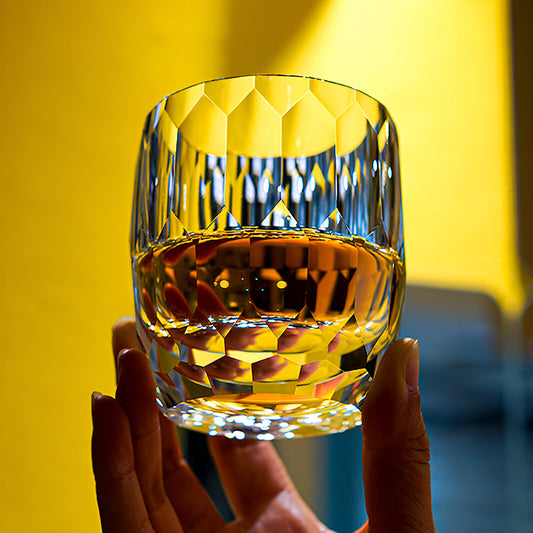
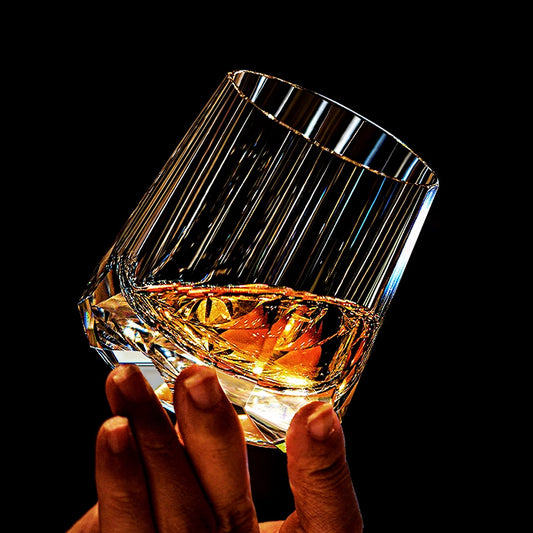
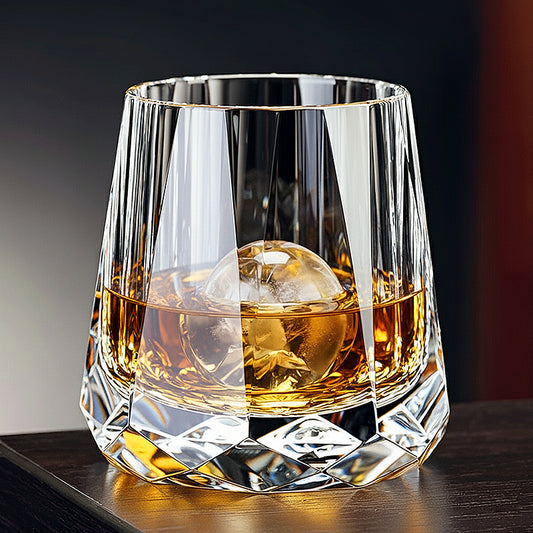
Imagine a quiet evening—pouring a single-malt whiskey into an Edo Kiriko rocks glass. The amber liquid dances through the carved facets, casting tiny rainbows on the table. Your guest pauses, lifts the glass, runs a finger over the cuts, and asks, “Is this the real deal?” You can answer with confidence.
Or a sushi dinner at home. Cold sake served in tiny “guinomi” cups with a hemp-leaf pattern. The frost on the glass matches the sugi (cedar) tray. It’s not just a meal; it’s an experience rooted in Tokyo’s Edo period.
Care Tips for Your Edo Kiriko Glass
- Hand wash only with a soft sponge and mild detergent. Avoid abrasive pads—they can dull the crisp edges over time.
- Do not put in the dishwasher; extreme heat and harsh detergents can cloud the crystal and may erode the suriaged base.
- Dry immediately with a lint-free cloth to prevent water spots.
- Store upright, not stacked, to protect the rim and cuts.
- If the glass has gold or silver rim details, treat it extra gently and avoid citrus scrubs.
Frequently Asked Questions
How can you tell if Edo Kiriko is real?
Look for sharp, precise cuts, a frosted “suriaged” base with fine scratches, minor asymmetries, the weight of crystal, and a clear ringing tone. A glossy bottom, rounded cuts, or perfect machine-like symmetry usually indicate a fake.
Is Edo Kiriko always handmade?
Yes. Authentic Edo Kiriko is hand-cut on a rotating stone wheel. The base glass blank may be blown or molded, but all cutting, polishing, and detailing are done by an artisan. No genuine piece is entirely machine-made.
What is the difference between Edo Kiriko and Satsuma Kiriko?
Both are Japanese cut glass traditions. Edo Kiriko originated in Tokyo and typically uses clear or single-color layered glass with geometric patterns. Satsuma Kiriko from Kagoshima often features more elaborate, multi-colored overlays and is historically associated with Shimazu clan patronage. Today, Edo Kiriko is the more common and widely produced.
Does real Edo Kiriko have a signature?
Many but not all. A signature or maker’s mark is usually found on the base or side in small engraved text. Some workshops use a paper sticker with the artist’s name. Absence of a signature doesn't automatically mean fake, but combined with other red flags it can be a warning.
Why is authentic Edo Kiriko so expensive?
Pricing reflects the cost of high-quality lead crystal, a decade or more of apprenticeship, and hours of painstaking hand-cutting per piece. A single tumbler can take an artisan three to five hours. You're paying for a functional artwork and a piece of Tokyo's cultural heritage.
Can I put Edo Kiriko glass in the microwave?
No. Lead crystal and the delicate cuts make it unsafe for microwave use. Always hand wash and avoid extreme temperature changes to prevent cracking.
What patterns are most faked?
Simple geometric repeats like “nanako” (tiny bumps) and “kiku” (chrysanthemum) are easiest to copy with molds. When buying those patterns, be extra vigilant about cut sharpness and base texture.
Conclusion
Real Edo Kiriko rewards the eye and hand in ways a fake never can. By feeling the weight, inspecting the base, and listening for that crystal ring, you become part of a lineage that stretches back to old Edo. It’s not just a glass—it’s a daily ritual of beauty.
Ready to own a piece of Tokyo’s living craft? Explore our curated selection of certified Edo Kiriko glassware—each with a maker’s story and authenticity guarantee, shipped from our US studio to your table.
Explore Our Collection
Ready to experience the world of Edo Kiriko glass? Browse our curated collection:
Disclaimer: This article is for informational purposes. Products and pricing subject to change.