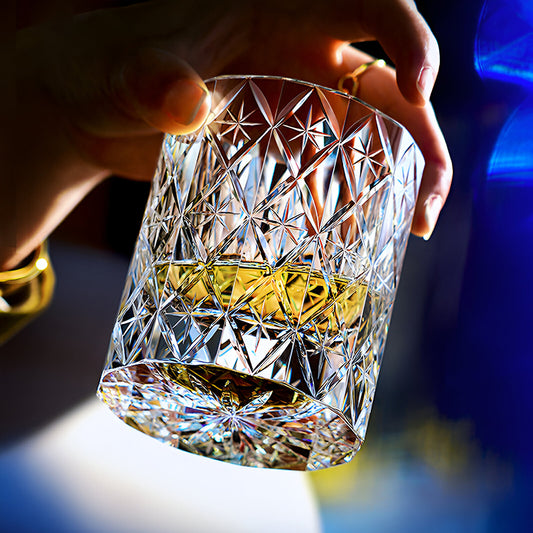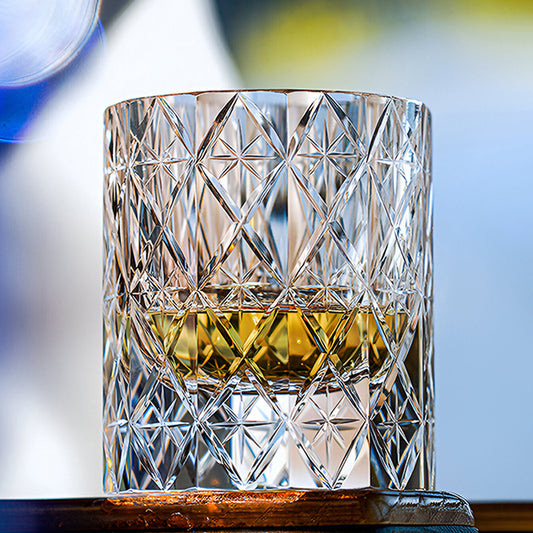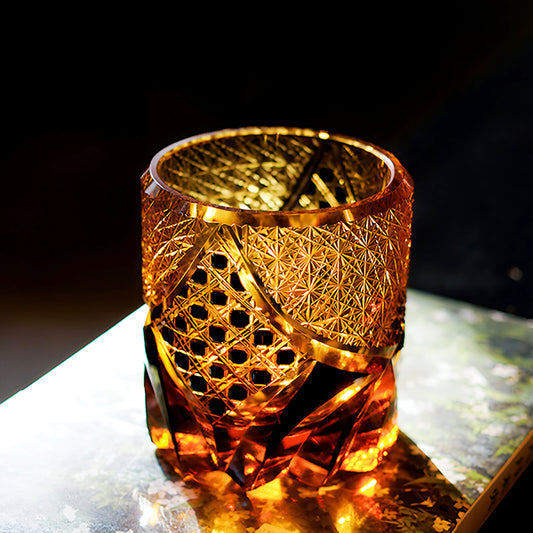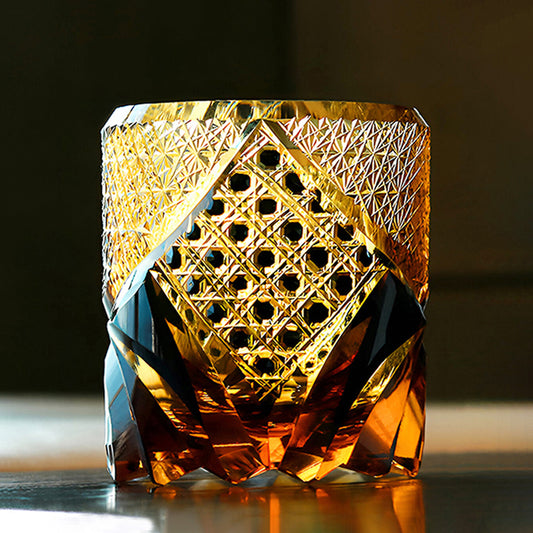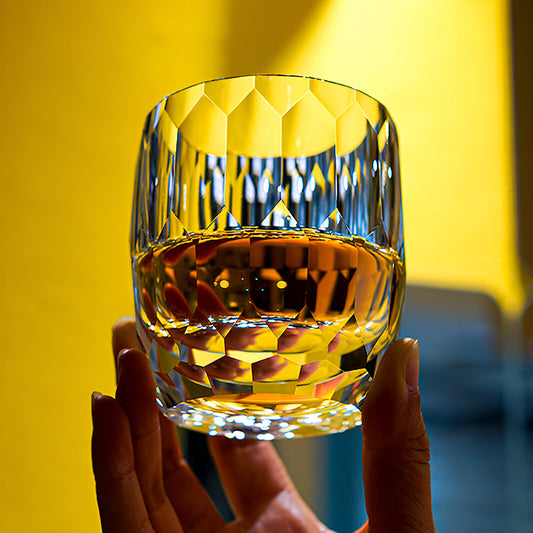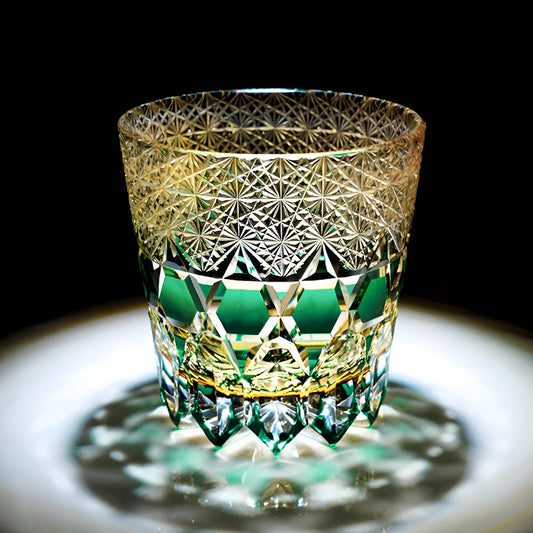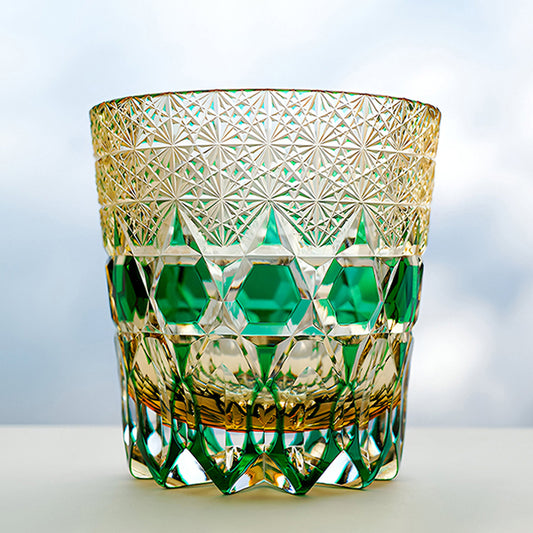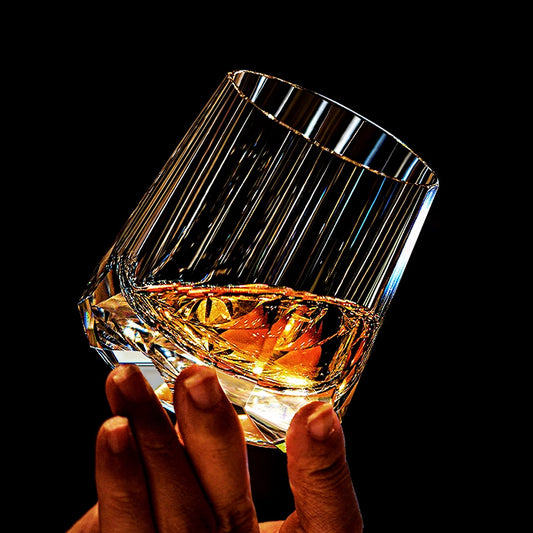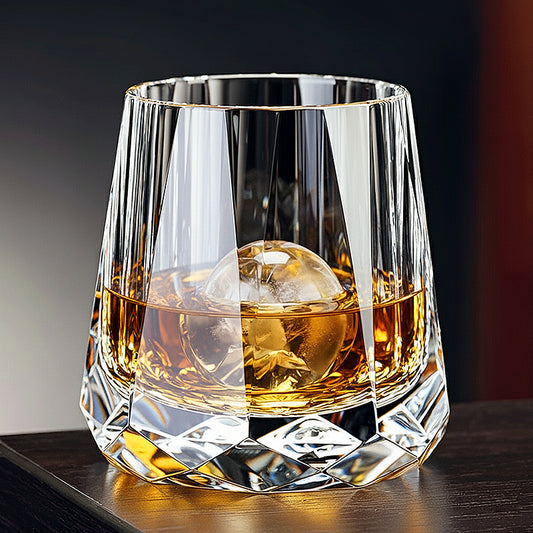

I’m Aiden Kuroda, a Tokyo glass cutter who has spent over a decade carving each curve and crosshatch into crystal by hand. When I see a bar cart displaying a shiny “Edo Kiriko” decanter that cost $15 from a dropshipping site, I feel a sting no amount of whiskey can numb. Authentic Edo Kiriko glass is a centuries-old craft that transforms a simple bourbon glass into a heirloom. But in the US market, counterfeits are everywhere. In this guide, I’ll teach you exactly how to spot fake Edo Kiriko—so you can buy genuine Japanese cut glass that honors the Tokyo craftsman who spent days creating it.
What Is Edo Kiriko Glass? A Quick Background for Bourbon Lovers
Edo Kiriko means “cut glass of Edo,” the old name for Tokyo. During the late Edo period (around 1834), glass artisans began applying diamond-tipped wheels to crystal, carving patterns inspired by traditional Japanese motifs—waves, cherry blossoms, bamboo, and geometric grids. The technique demands that every facet be ground and polished by hand, without the safety net of a mold or CNC machine. A true Edo Kiriko whiskey tumbler isn’t just a whiskey glass; it’s a marriage of transparency and light-play that elevates a sip of bourbon into a ritual.
What Makes Edo Kiriko Glass Authentic? The Telltale Signs of True Tokyo Craftsmanship
To answer japanese glass identification questions from my US friends, I always point to three non-negotiable pillars. First is the glass cutting technique: genuine Edo Kiriko is cut while the glass rotates against a water-cooled iron disk. That leaves tiny parallel lines inside each groove—you can feel them with your fingernail. Machine-etched fakes are wavy under magnification but smooth to the touch. Second is material. Real Edo Kiriko uses lead crystal (usually 24% PbO) or high-clarity soda glass that rings like a bell; fakes often feel lighter, with a dull thud. Third is the edo kiriko glass authenticity mark: most Tokyo studios inscribe the artist’s signature or the workshop stamp on the base with a diamond point. No signature doesn’t always mean fake, but mass-produced copies almost never have one.
How to Spot Fake Edo Kiriko: 5 Red Flags to Watch For
I see the same errors again and again in bars and online stores. Memorize these five red flags and you’ll stop wasting money on real vs fake japanese glassware mistakes.
- Too-smooth cuts. An authentic piece has slightly uneven groove widths—you’re seeing the human hand. If every line looks laser-perfect and identical, a computer did it.
- Price under $30. A genuine hand-cut Edo Kiriko whiskey glass retails for at least $80–$120. Sets under $50 are always machine-made or molded glass.
- Mold lines. Look for a vertical seam running from rim to base. That’s a injection-molded fake; real Edo Kiriko starts as a blown blank with no seam.
- Absence of fire-polished edges. After cutting, the artisan flash-heats the piece to smooth sharp facets while preserving crisp ridges. Fakes either leave the cuts razor-sharp or over-polish them to a soft blur.
- Mass-market packaging. Edokiriko ships in a paulownia wood box with a traditional wrapping cloth. Plastic blister packs are a dead giveaway.
Real vs Fake Japanese Glassware: A Hands-On Comparison
The table below sums up what I check when someone asks me to verify a piece. Use this as your cheat sheet the next time you’re shopping for crystal whiskey glasses or a complete japanese whiskey glass set.
| Feature | Authentic Edo Kiriko | Counterfeit / Mass-Produced |
|---|---|---|
| Cutting technique | Hand-cut with wet diamond wheel; visible tool marks and slight irregularities | Machine-etched, press-molded, or laser-engraved; perfectly uniform, too smooth |
| Material | Lead crystal (24% PbO) or fine soda glass; weighty, resonant ring when tapped | Thin soda-lime glass; light, hollow sound, may have bubbles or internal streaks |
| Price per glass | $80–$300+ | $10–$35 |
| Artist signature | Hand-engraved mark or studio stamp on base | None, or a laser-printed logo that rubs off |
| Packaging | Paulownia wood box with wrapping cloth and certificate | Cardboard box or plastic blister |
| Edge feel | Crisp yet fire-polished, safe to lip | Rough, sharp, or overly round |
When you Explore luxury whiskey glasses, always ask the seller if their Edokiriko is hand-cut in Tokyo. Reputable dealers will answer with specifics—not vague marketing copy.
Are All Japanese Cut Glass Edo Kiriko? Understanding the Difference
No, and knowing this is key to accurate japanese glass identification. Edo Kiriko specifically comes from Tokyo (formerly Edo) and must use traditional patterns like nanako (fish roe), sakura (cherry blossom), or kiku (chrysanthemum). Other regions produce their own cut glass—Satsuma Kiriko from Kagoshima, for example, which adds colored overlays. Mass-market engravers all over Japan also produce cheap glass that looks “cut” but has no regional heritage. So if a product is labeled only “Japanese cut glass” with no mention of Edo or Tokyo, investigate further. True japanese barware collectors look for the “Tokyo” connection and the artist’s lineage.
Why Authentic Edo Kiriko Whiskey Glass Sets Make Perfect Gifts
An Edo Kiriko whiskey glass checked for authenticity becomes a gift that tells a story. I’ve watched American groomsmen unwrap a pair of hand-cut crystal tumblers and immediately hold them up to the light, mesmerized by the sparkle. A japanese whiskey glass set —especially one featuring classic Edo patterns—elevates a home bar and signals respect for craftsmanship. Because counterfeits are so common, giving the real thing demonstrates thought and sophistication. When you Discover Japanese whiskey glasses, you’re giving a piece of Tokyo history that stays on the shelf for decades.
Who Should Buy Real Edo Kiriko Glasses?
If you sip whiskey neat or on the rocks and appreciate gear that improves the experience, you’re the ideal owner. Collectors of crystal whiskey glasses often add one Edo Kiriko pair to their rotation and immediately notice the difference—the weight, the way the ice clinks, the optical dance of amber liquid through carved facets. Gift seekers looking for a memorable groomsman present, anniversary gift, or retirement token for a boss will find an authentic Edo Kiriko tumbler outshines any generic decanter. And if you’re a bourbon glass enthusiast who wonders why a $20 knockoff never quite delivers that “wow” moment, investing in the real thing may change how you perceive whiskey forever.
FAQ: Your Questions About Edo Kiriko Glass Authenticity
How can I tell if my Edo Kiriko glass is real?
Flip it over. A hand-engraved artist mark or workshop symbol on the bottom is a strong indicator. Next, run your fingernail across the cuts—real hand-cut grooves feel slightly textured. Finally, the glass should be weighty and produce a clear ring when flicked; fakes often sound flat.
What is the difference between hand-cut and machine-cut Japanese glass?
Hand-cut pieces show subtle variations: the depth and width of each groove shift by fractions of a millimeter. Machine-cut or laser-etched glasses have identical cuts with no life. Hand-cutting also leaves microscopic parallel striations inside each facet, a footprint of the spinning wheel that you can see under a loupe.
Do fake Edo Kiriko glasses use lead crystal?
Almost never. Because lead crystal is expensive and heavy to ship, counterfeiters use cheap soda-lime glass that lacks the refractive sparkle. If the glass feels surprisingly light and lacks a rainbow glint at cut edges, it’s not lead crystal and probably not real.
Are there specific marks to identify genuine Edo Kiriko?
Yes. Most Tokyo workshops engrave their name in Japanese characters—often 江戸切子 (Edo Kiriko) plus the artisan’s initials or the studio stamp. Some display a certification sticker with a serial number. No single mark guarantees authenticity, but a complete absence of any mark on a new glass sold as “hand-cut” should raise suspicion.
Where can I buy authentic Edo Kiriko whiskey glasses?
Stick to reputable retailers that specialize in Japanese crafts, and always check for detailed product descriptions naming the Tokyo workshop. Avoid general marketplaces where “Edo style” is used as a keyword. If you’re looking for curated, verified pieces, Explore luxury whiskey glasses selected directly from Tokyo artisans to ensure you receive a hand-cut original.
Collecting authentic Edo Kiriko is about more than owning a pretty glass—it’s about connecting with a living tradition that demands patience, skill, and the human eye. I hope these telltale signs save you from winding up with a fake and bring you closer to the true sparkle of Tokyo craftsmanship. If you still have doubts about a piece in your hand, feel free to send me a photo. I can usually spot a counterfeit in under ten seconds. Now go pour yourself a dram and let the light play through something real.
Explore Our Collection
Ready to experience the world of Edo Kiriko glass? Browse our curated collection:
Disclaimer: This article is for informational purposes. Products and pricing subject to change.