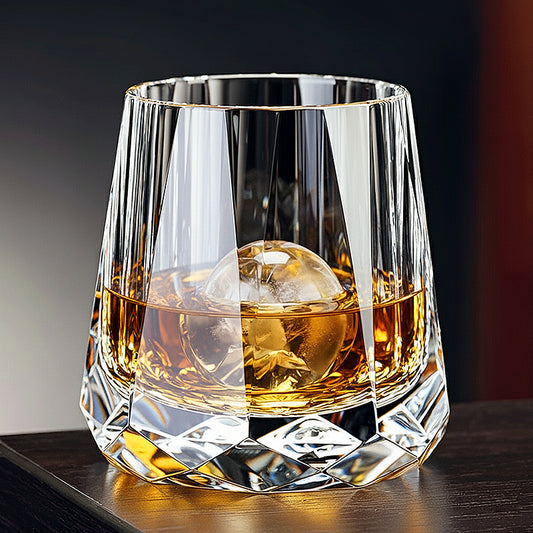

Edo Kiriko Glass: A Heritage Upgrade for Your Home Bar
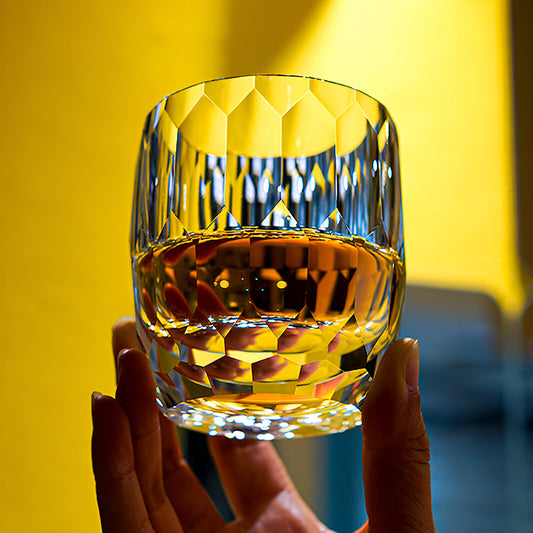
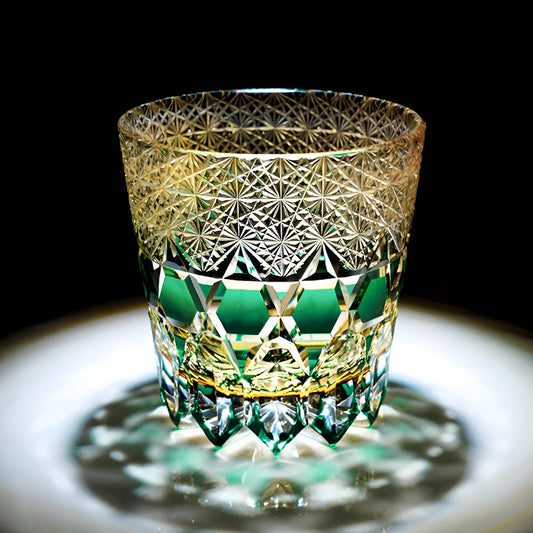
An Edo Kiriko glass is a hand-cut Japanese crystal glass known for sharp geometric patterns, vivid color layers, and a brilliant sparkle that makes whiskey feel more ceremonial. For a home bar, an Edo Kiriko whiskey glass works like a tailored jacket: functional, refined, and instantly noticeable without shouting.
For US buyers discovering Japanese traditional glass art for the first time, Edo Kiriko offers more than beauty. It carries a story from Tokyo, the Edo period, and generations of patient cutting work by artisans who turn everyday drinkware into heirloom-level handcrafted glassware.
Key takeaways
- Edo Kiriko glass is a Japanese cut glass tradition closely associated with Tokyo craftsmanship.
- The style began as edo period glassware and developed into a refined decorative art.
- Its signature look comes from a precise glass cutting technique that carves patterns into colored crystal.
- An Edo Kiriko whiskey glass is especially appealing for japanese whiskey, bourbon, Scotch, and premium home bar service.
- For gifting, an edo kiriko glass set feels personal, cultural, and luxurious without being overly formal.
What is Edo Kiriko glass for a home bar?
Edo Kiriko glass is Japanese crystal that has been cut by hand with detailed patterns. The word “Edo” refers to old Tokyo, while “Kiriko” means cut glass. In plain terms, imagine fine crystal with designs carved into it like facets on a gemstone.
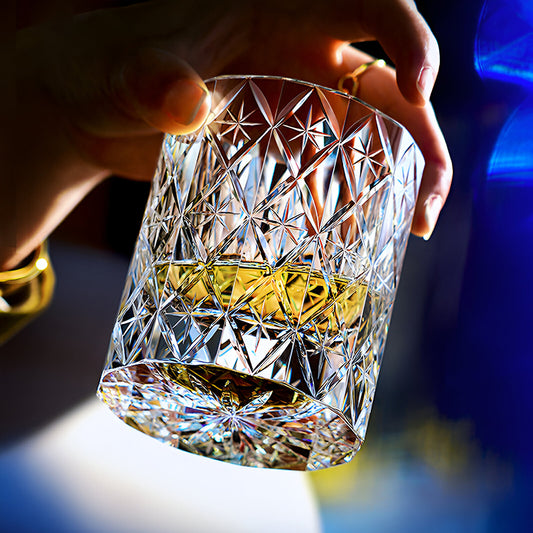
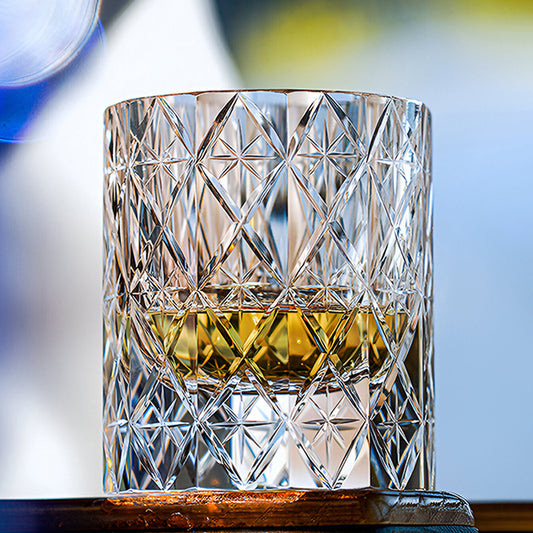
The appeal for a home bar is both visual and tactile. When light hits the cut pattern, the glass flashes with depth. When you hold it, the texture gives your fingers something to notice before the first sip.
That small pause matters. Premium lifestyle buyers often build a home bar around ritual: the bottle selected, the ice shaped, the pour measured, the glass chosen. Edo Kiriko glass fits that ritual because it makes the drink feel intentional.
It is not limited to japanese whiskey. Many US collectors use it for bourbon, rye, Scotch, aged rum, or even a simple sparkling water. The glass does not need a rare bottle to look right. It simply makes a familiar drink feel more composed.
Discover Japanese whiskey glasses if you want a piece that blends Japanese heritage with everyday use.

How did edo kiriko history begin in the Edo period?
The story of Edo Kiriko begins in Japan during the Edo period, when Tokyo was known as Edo. Glass was rare, precious, and closely tied to imported techniques, local curiosity, and the growing sophistication of urban craft culture.
Early edo period glassware was not mass-market drinkware. It was a sign of fascination with light, transparency, and technical skill. Over time, Japanese makers adapted glass cutting methods and developed a visual language that felt distinctly local.
That is the heart of edo kiriko history: it is not just a copy of Western cut crystal. It is a Tokyo-born craft shaped by Japanese taste. The patterns often feel architectural, rhythmic, and balanced, like a city grid softened by handwork.
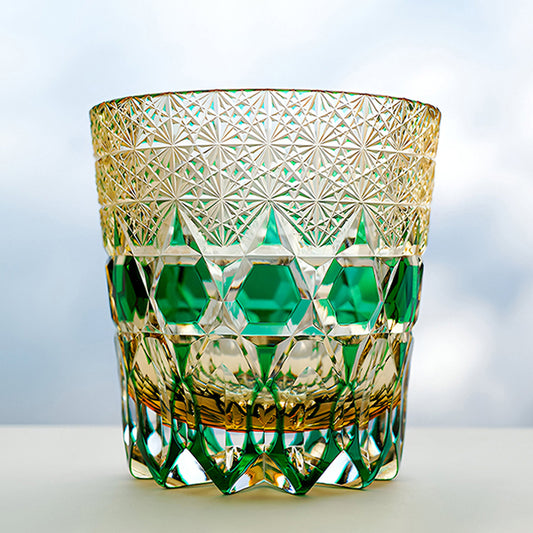
Traditional motifs may suggest hemp leaves, chrysanthemums, bamboo, stars, or flowing nets. To a beginner, they may simply look geometric. To a collector, they carry cultural memory.
This is why an Edo Kiriko glass can feel different from ordinary luxury glassware. It carries the trace of a place. When you pick it up, you are holding a craft that grew out of Tokyo’s older identity, not just a decorative product made to match a trend.
Why do tokyo glass craftsmen matter to the story?
The best way to understand Edo Kiriko is to picture the workshop, not the showroom. Tokyo glass craftsmen work with wheels, abrasives, water, pressure, and experience. The object may look glamorous when finished, but the process is controlled, physical, and unforgiving.
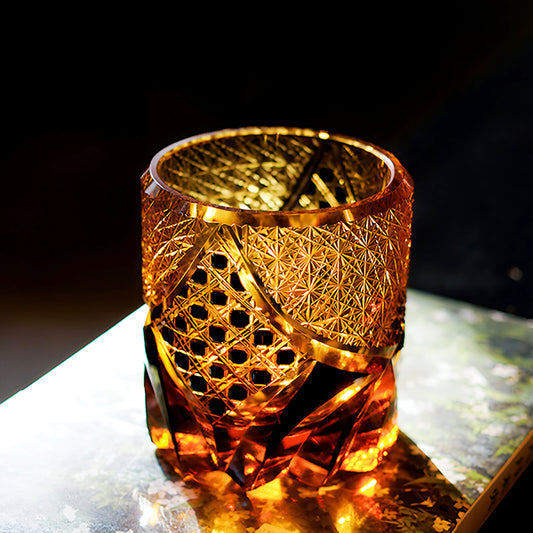
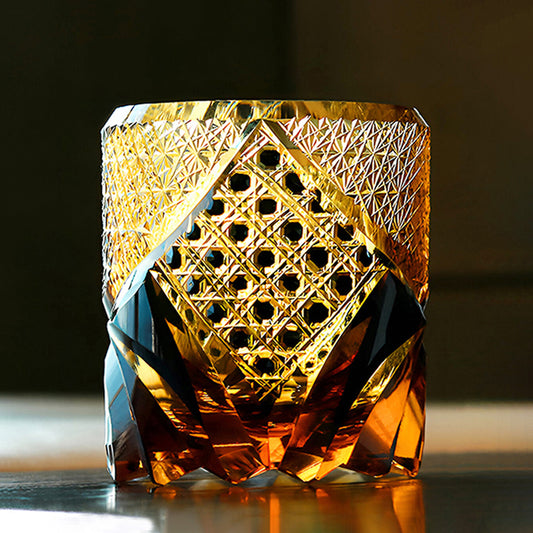
A tokyo craftsman typically starts with a clear or colored glass blank. In many pieces, a layer of colored glass sits over a clear base. The artisan cuts through the colored layer to reveal the clear crystal underneath. That contrast creates the glowing pattern.
The glass cutting technique demands steady hands. Cut too lightly, and the design lacks life. Cut too deeply, and the wall can weaken or the pattern can lose balance. The artisan must think in curves, angles, depth, and reflection at the same time.
For US buyers used to machine-perfect products, this is the charm. Handcrafted Japanese glassware can have subtle individuality. The lines are precise, but the object still carries the presence of the person who made it.
That human mark is part of the value. A machine can repeat a pattern quickly. A skilled artisan can decide how the pattern should breathe around the shape of the glass.
What makes japanese traditional glass art different from regular crystal?
Regular crystal can be beautiful, but japanese traditional glass art often places more emphasis on harmony between pattern, color, and use. Edo Kiriko is not decoration placed on top of a glass. The decoration is cut into the glass itself.
Think of the difference between a printed necktie and a woven silk tie. Both can carry a design, but one has the design embedded into the material. Edo Kiriko works in that embedded way.
Japanese crystal used for Edo Kiriko often has a bright, jewel-like presence. Blues, reds, purples, greens, and amber tones are common in contemporary pieces. When cut, the clear inner layer reveals crisp contrast and lets light travel through the pattern.
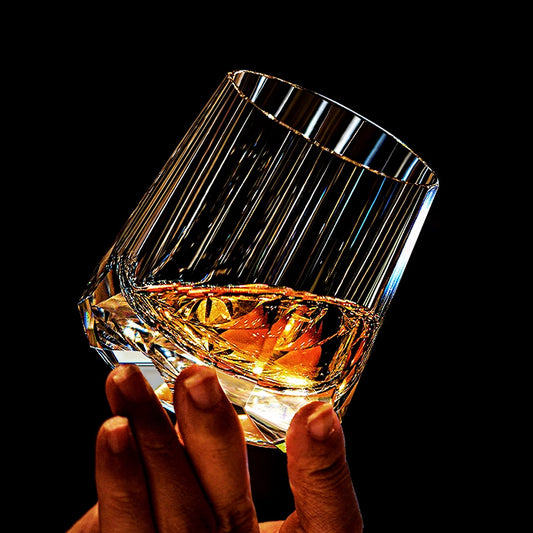
The result is a glass that changes with its environment. Under bar lighting, it can look dramatic. Near a window, it may look delicate. With a dark whiskey inside, the color deepens and the cuts become more dimensional.
This is why Edo Kiriko glass is not only a serving vessel. It is a piece of handcrafted glassware that performs with light.
How is an Edo Kiriko whiskey glass made?
While individual workshops vary, the making of an Edo Kiriko whiskey glass usually follows a thoughtful sequence. The craft depends on preparation as much as cutting.
- Design planning: The artisan chooses a pattern that suits the glass shape and intended use.
- Marking: Guide lines may be placed on the surface so the cuts stay balanced.
- Rough cutting: A wheel removes glass and establishes the main pattern.
- Fine cutting: Smaller details are added to sharpen the design.
- Polishing: The cut areas are refined until they catch light cleanly.
- Inspection: The finished glass is checked for clarity, symmetry, comfort, and finish.
For a whiskey glass, weight and hand feel matter. A good tumbler should feel grounded, but not clumsy. The rim should be pleasant. The base should support ice. The pattern should improve grip without feeling rough.
These practical details are easy to overlook online. Yet they are the difference between a glass that only looks collectible and one you actually enjoy using.
Browse crystal whiskey glass sets if you are comparing pieces for a home bar or a gift.
Is an edo kiriko glass set a good gift for men?
Yes, an edo kiriko glass set can be an excellent gift for men, especially for someone who enjoys whiskey, design, Japan, travel, craft, or home entertaining. It feels more personal than another bottle because it stays in the home long after the drink is gone.
For birthdays, Father’s Day, anniversaries, promotions, retirements, groomsmen gifts, or holiday gifting, an Edo Kiriko whiskey glass carries a useful kind of luxury. It is special, but not fragile in spirit. It is made to be handled.
The strongest gift choice depends on the recipient. A single statement glass can suit a solo whiskey drinker. A pair is better for someone who hosts or shares drinks with a partner. A larger edo kiriko glass set works well for a complete home bar upgrade.
| Gift choice | Best for | Why it works |
|---|---|---|
| Single Edo Kiriko whiskey glass | Collectors, solo drinkers, milestone gifts | Feels personal and display-worthy |
| Pair of glasses | Couples, hosts, anniversaries | Encourages shared use without feeling excessive |
| Edo kiriko glass set | Home bar owners, premium gifting | Creates a complete service moment |
| Mixed color set | Design-focused buyers | Adds visual variety and personality |
For premium lifestyle buyers, the value is not only the price or rarity. It is the story that can be told when the glass is handed over: this is a Japanese crystal piece inspired by Tokyo craft, rooted in the Edo period, and cut by skilled hands.

How should beginners choose handcrafted japanese glassware?
If you are new to handcrafted japanese glassware, start with use. A glass that fits your routine will be appreciated more than one that stays hidden in a cabinet.
For whiskey drinkers, look for a tumbler shape with enough width for a large ice cube. For display, choose a color that works with your bar shelf, tray, or cabinet lighting. For gifting, choose a classic pattern rather than a highly unusual design unless you know the recipient’s taste well.
Pay attention to three practical details:
- Size: A versatile whiskey glass usually holds a neat pour, a rock, or a simple cocktail.
- Weight: It should feel substantial but comfortable.
- Pattern depth: The cuts should look crisp and intentional, not cloudy or shallow.
Color is personal. Deep blue often feels calm and refined. Red feels celebratory. Clear crystal feels understated. Purple or green can feel more distinctive and collectible.
For US buyers, the easiest analogy is choosing a watch. You can buy one because it tells time, but the real choice is about finishing, heritage, and how it feels on the wrist. Edo Kiriko glass works the same way. It holds a drink, but the deeper pleasure is in the craft.
How do you care for an Edo Kiriko glass at home?
Most Edo Kiriko pieces should be treated as fine handcrafted glassware. Hand washing is the safest habit. Use mild soap, warm water, and a soft sponge. Avoid abrasive pads, harsh detergents, and sudden temperature changes.
Dry the glass with a lint-free cloth to prevent water spots. If the cuts hold moisture, let the glass air dry briefly before storing. Keep pieces separated so the cut surfaces do not knock against other glassware.
For home bar use, avoid stacking unless the maker specifically says it is safe. Edo Kiriko is durable enough for regular enjoyment, but it should be handled with the respect you would give a quality chef’s knife or a mechanical watch.
Using it often is not a mistake. In fact, regular use keeps the object connected to its purpose. The best craft does not need to live behind glass.
Why does Edo Kiriko glass fit modern American homes?
Modern American interiors often mix clean lines, global influences, and personal objects with a story. Edo Kiriko glass fits that mix naturally. It can sit beside walnut shelves, marble counters, steel bar tools, leather trays, or minimalist glassware without looking out of place.
It also connects with the growing interest in japanese whiskey. Many drinkers who discover Japanese distilleries become curious about Japanese serving culture, design, and craft. An Edo Kiriko whiskey glass turns that curiosity into something tangible.
But the glass does not require a full Japanese bar setup. It can sit next to Kentucky bourbon just as comfortably. That cross-cultural ease is part of its charm: Tokyo craft meeting an American home bar ritual.
For a brand story, this is the most compelling point. Edo Kiriko is not frozen in a museum version of Japan. It is living craft. Each glass can move from a Tokyo workshop to a New York apartment, a Dallas home bar, a Seattle condo, or a California dining room and still feel authentic.
FAQ
What is an Edo Kiriko glass?
An Edo Kiriko glass is a Japanese cut crystal glass associated with Tokyo. It is made by cutting decorative patterns into the surface, often through colored glass to reveal clear crystal beneath.
What is edo kiriko history in simple terms?
Edo kiriko history traces back to glass cutting in old Tokyo during the Edo period. Over generations, artisans refined the technique into a recognized form of japanese traditional glass art.
Why are tokyo glass craftsmen important?
Tokyo glass craftsmen preserve the cutting skills, pattern knowledge, and finishing standards that define Edo Kiriko. Their handwork gives each piece its crisp detail and individual character.
Is an Edo Kiriko whiskey glass good for japanese whiskey?
Yes. An Edo Kiriko whiskey glass is excellent for japanese whiskey because the clear crystal, balanced weight, and detailed cuts enhance the visual ritual of a neat pour or whiskey over ice.
Is an edo kiriko glass set a good gift for men?
Yes. An edo kiriko glass set is a strong gift for men who enjoy whiskey, home bars, Japanese design, or premium craft objects. It feels useful, refined, and memorable.
How is Edo Kiriko different from ordinary handcrafted glassware?
Edo Kiriko uses a specific Japanese glass cutting technique rooted in Tokyo craft heritage. The pattern is cut into the glass, creating depth, texture, and brilliant light reflection.
Can I use Edo Kiriko glass every day?
You can use it regularly if you handle it with care. Hand wash, avoid sudden temperature changes, and store it separately from other hard glassware to protect the cut surface.
Conclusion: A small glass with a long journey
Edo Kiriko glass is more than a beautiful tumbler. It is a compact story of Japan, Tokyo, the Edo period, artisan patience, and the pleasure of using well-made things.
For beginners, it is an accessible doorway into japanese traditional glass art. For premium lifestyle buyers, it is a sophisticated home bar upgrade. For gift shoppers, it offers the rare combination of beauty, function, and cultural meaning.
Whether you choose a single Edo Kiriko whiskey glass or a complete edo kiriko glass set, the value is in the moment it creates: light through cut crystal, a favorite pour, and a piece of handcrafted Japanese glassware made to be noticed slowly.
Explore Our Collection
Ready to experience the world of Edo Kiriko glass? Browse our curated collection:
Disclaimer: This article is for informational purposes. Products and pricing subject to change.