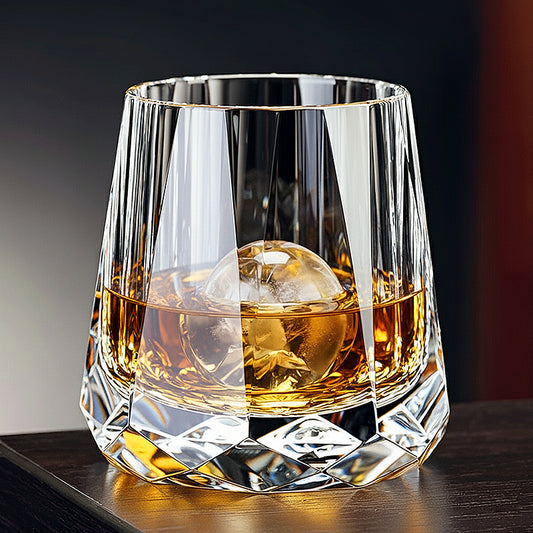

Edo Kiriko Glass: How to Buy an Authentic Japanese Whiskey Glass for a Home Bar Gift
An Edo Kiriko glass is a Japanese cut crystal glass known for sharp hand-cut patterns, brilliant color contrast, and roots in Tokyo craft culture. If you are choosing a Japanese whiskey glass for a home bar, bourbon pour, or memorable gift for men, authenticity matters because real edo kiriko feels and looks very different from mass-produced imitation glassware.
Think of it like the difference between a hand-stitched leather wallet and a stamped factory version. Both may hold value, but only one carries the maker’s skill in every line.
Key Takeaways
- Real Edo Kiriko is cut and polished by skilled artisans, often connected to Tokyo workshops and traditional Japanese craft.
- Authentic pieces usually show crisp pattern edges, balanced geometry, weighty crystal, and controlled light reflection.
- Common fakes rely on molded patterns, printed color, machine etching, or vague “Japanese style” wording.
- For whiskey, bourbon, or home bar use, look for a glass that feels stable, comfortable, and visually clear under light.
- When in doubt, ask for maker details, origin, materials, and process information before buying.
If you are building a refined bar setup, you can Browse crystal whiskey glass sets or Discover Japanese whiskey glasses designed for collectors, hosts, and premium gifting.
What Is an Edo Kiriko Glass and Why Does Authenticity Matter?
Edo Kiriko is a style of Japanese cut glass that developed in Tokyo, historically known as Edo, during the late Edo period. “Kiriko” means cut glass, and the craft is admired for precise geometric patterns carved into colored or clear glass.
For a US buyer, the easiest comparison is fine crystal stemware or hand-cut decanters, but with a distinctly Japanese design language. Edo Kiriko patterns often feel architectural: stars, bamboo leaves, fish scales, latticework, chrysanthemums, and intersecting lines that catch light from every angle.
Authenticity matters because the value of an Edo Kiriko glass is not only in the material. It is in the controlled cutting, polishing, pattern planning, and cultural continuity behind the object. A real piece is handcrafted glassware made through patient manual work. A fake may look decorative in a product photo, but it usually lacks depth, sparkle, and long-term collectible appeal.
This is especially important when shopping for a luxury whiskey glass, bourbon glass, or unique whiskey glasses for men. A premium gift should feel intentional when opened, held, and used. Authenticity turns the glass from a drinking vessel into a conversation piece.
How to Spot Fake Edo Kiriko Before You Buy?
Learning how to spot fake edo kiriko starts with slowing down and looking at the details. Many imitations borrow the look of Edo Kiriko, but they skip the most difficult parts: deep cutting, even polishing, and pattern symmetry.
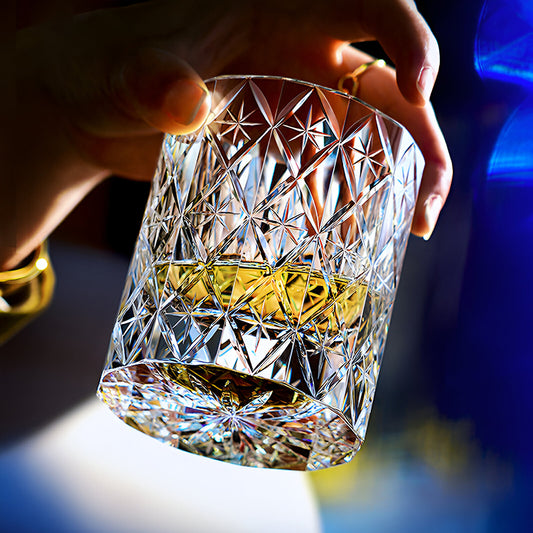
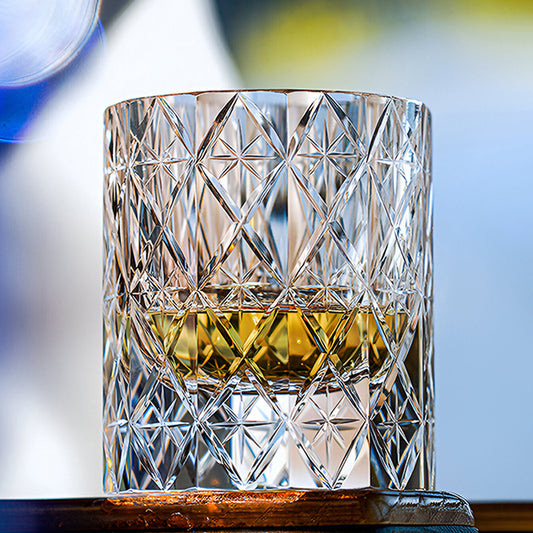
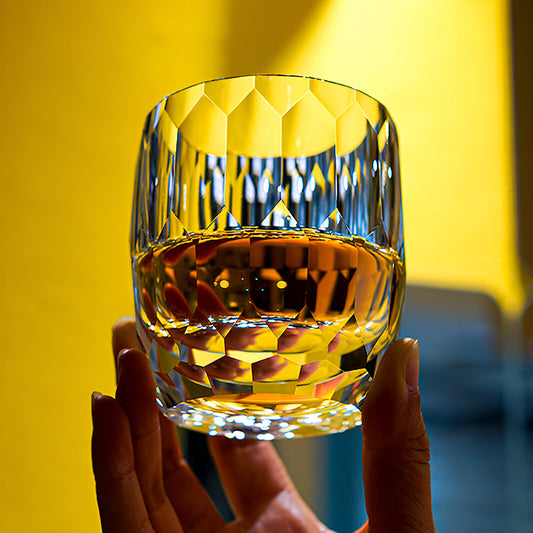
Start with the cuts. On authentic pieces, cut lines usually appear crisp and dimensional. The edges are defined, but not rough. When you tilt the glass under light, the pattern should flash and change because the cuts have real depth.
On lower-quality fakes, the pattern may look shallow, cloudy, or too uniform. Some are molded into the glass rather than cut. Molded designs often feel rounded and soft, like a design pressed into plastic. True cut glass has sharper planes and more lively light reflection.
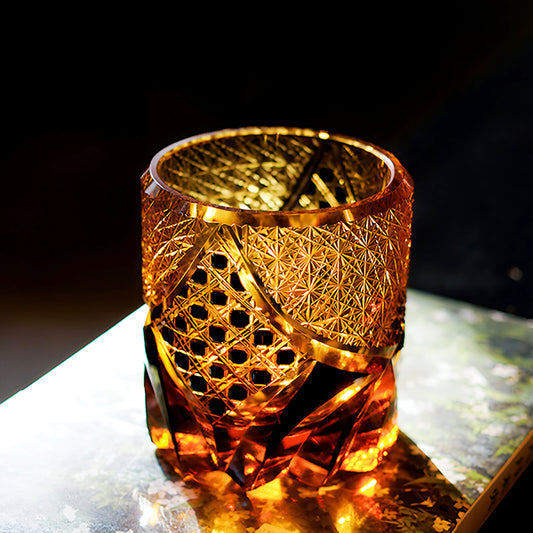
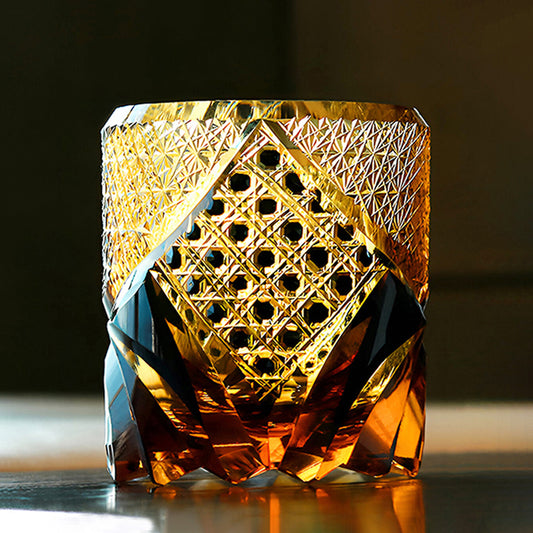
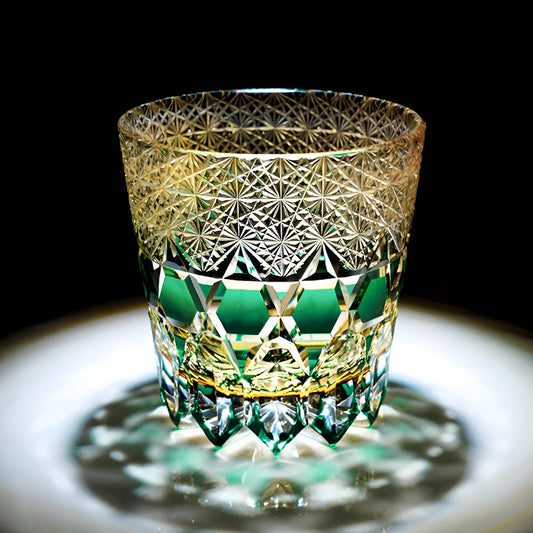
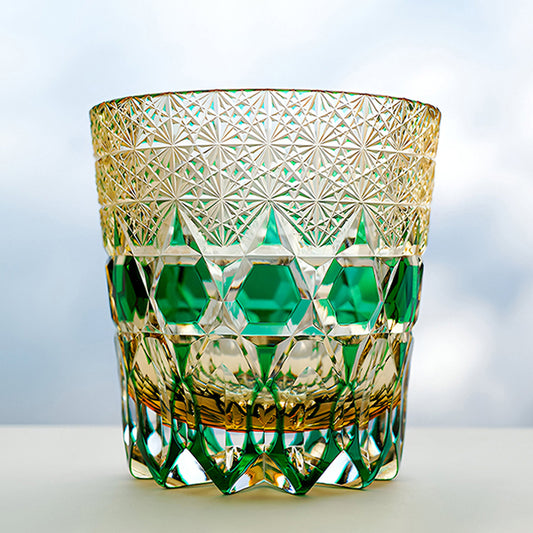
Next, check the color. Traditional Edo Kiriko often uses colored glass layered over clear glass. Artisans cut through the color layer to reveal clear crystal beneath. This creates high contrast between rich color and transparent cut areas. If the color looks painted on, printed, sprayed, or unevenly coated, treat that as a warning sign.
Also check the product language. Authentic sellers usually explain the maker, region, material, and process. Vague phrases like “Edo style,” “Japanese inspired,” or “Kiriko look” may describe design inspiration, not real edo kiriko glass authenticity.
Real vs Fake Japanese Glassware: What Are the Telltale Differences?
The real vs fake japanese glassware comparison is easiest when you evaluate several clues together. No single sign proves everything, but a pattern of evidence can tell you a lot.
| Feature | Authentic Edo Kiriko | Common Fake or Imitation |
|---|---|---|
| Cut depth | Noticeable carved depth with sharp light play | Shallow etching, molded texture, or flat decoration |
| Pattern quality | Balanced geometry with intentional spacing | Uneven, blurry, overly perfect, or poorly aligned patterns |
| Color | Layered colored glass cut to reveal clear glass | Painted, sprayed, printed, or weak color finish |
| Feel | Substantial, smooth, and carefully finished | Light, rough, slippery, or plasticky in the pattern areas |
| Seller details | Mentions craft origin, workshop, maker, or process | Uses broad claims without provenance |
| Price logic | Premium pricing reflects labor and craft | Very low price for a supposedly handmade piece |
Weight is another useful clue. A quality whiskey glass or bourbon glass often has a reassuring heft, especially if it is crystal. That said, heavy glass alone does not prove authenticity. Some cheap glasses are thick and heavy but poorly cut.
Look at the rim and base too. A well-made Japanese whiskey glass should have a smooth rim, stable base, and clean finishing. If the rim feels sharp in the wrong way, the base wobbles, or the design feels gritty, the piece may not meet the standards you expect from handcrafted glassware.
What Does Edo Kiriko Glass Authenticity Look Like in the Materials?
Edo kiriko glass authenticity often begins with material quality. Many premium pieces use crystal or high-quality glass that allows clean cutting and strong brilliance. The glass should be clear, not hazy, with patterns that look bright when they catch light.
In classic colored Edo Kiriko, the artisan cuts through a colored outer layer to reveal transparent glass below. This layered construction creates dramatic contrast, especially in deep red, blue, purple, green, amber, or black-toned designs. The cut areas should not look like surface scratches. They should look like small windows carved into the glass.
When evaluating japanese glass identification, inspect how the pattern behaves from different angles. A real cut surface reflects light in multiple directions. It may sparkle along the edges, then darken or brighten as you turn it. A printed or laser-like surface effect often looks flatter.
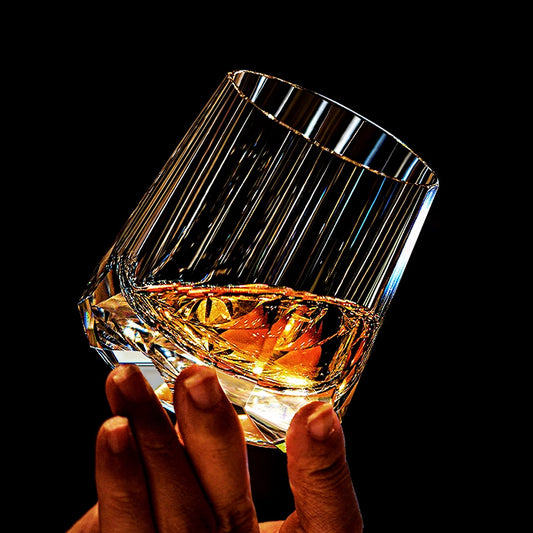
For whiskey and bourbon drinkers, material quality affects the experience too. A good glass should feel stable in hand, allow aroma to rise, and make the drink visually appealing. When amber whiskey meets red or cobalt Edo Kiriko-style crystal, the color contrast can be striking on a home bar.
How Can You Identify the Process Markers of a Tokyo Craftsman?
A Tokyo craftsman working in the Edo Kiriko tradition usually follows a process that requires planning, cutting, smoothing, and polishing. The pattern is not simply decoration added at the end. It is built into the glass through skilled removal of material.
First, the artisan maps the design. Good Edo Kiriko patterns look balanced because the maker understands spacing, proportion, and how the motif will wrap around a curved surface. On a tumbler, even a small misalignment can be obvious.
Then the glass is cut using wheels and abrasives. This is where the pattern gains depth. Traditional Japanese craft often rewards restraint and precision, not loud decoration. The best pieces do not need excessive ornament to feel luxurious.
After cutting, the surfaces are polished. This step matters. Raw cuts can look frosted or rough. Polishing brings clarity and brightness, allowing the pattern to glow. If a piece looks dull everywhere, it may be unfinished, cheaply etched, or not true cut glass.
Handwork does not mean sloppy work. Small variations can exist, but authentic craft should feel controlled. A real Edo Kiriko glass may show the human hand in subtle ways, while still presenting clean symmetry and refined finishing.
What Are the Most Common Fake Edo Kiriko Glass Styles?
Common fakes fall into a few categories. The first is molded glass. These pieces imitate cut patterns, but the design is formed in the mold rather than carved afterward. Molded patterns often have rounded edges and weak sparkle.
The second is surface-etched glass. Etching can be beautiful in its own right, but it is not the same as deep cut Edo Kiriko. If the design looks pale, powdery, or shallow, it may be etched rather than cut.
The third is painted or coated glass. Some products use colored coatings to mimic layered crystal. Over time, low-quality coatings may scratch, fade, or look uneven. Authentic layered glass should not feel like a thin film sitting on the surface.
The fourth is vague “Japanese style” glassware. These items may be attractive and affordable, but they should not be presented as genuine Edo Kiriko. For buyers, the issue is not inspiration. The issue is paying authentic craft prices for something that is only inspired by the craft.
Finally, watch for unrealistic pricing. A hand-cut luxury whiskey glass requires skilled labor. If a full set is priced like ordinary barware while claiming to be handmade Edo Kiriko from Japan, ask more questions.
How Should Beginners Approach Japanese Glass Identification Online?
Japanese glass identification online requires a practical checklist. Photos can hide weak cutting, poor finishing, and fake color, so you need to read the listing carefully.
- Look for close-up images of the cut pattern, rim, base, and interior.
- Check whether the seller explains the origin in Japan, especially Tokyo or a named workshop.
- Look for process terms such as hand-cut, polished, layered glass, or crystal.
- Avoid listings that use only generic lifestyle photos with no detail shots.
- Compare the price to the claimed level of handcraft.
- Ask whether the item includes a box, maker card, certificate, or workshop information.
For premium lifestyle buyers, the box and presentation also matter. A gift-worthy Edo Kiriko glass should arrive in packaging that supports the value of the object. This is particularly relevant when shopping for unique whiskey glasses for men, anniversary gifts, retirement gifts, Father’s Day gifts, or a refined home bar upgrade.
Still, packaging alone does not prove authenticity. A nice box can be copied. Treat it as supporting evidence, not the whole case.
Is an Edo Kiriko Glass a Good Gift for Men Who Enjoy Whiskey or Bourbon?
Yes, an Edo Kiriko glass can be an excellent gift for men who enjoy whiskey, bourbon, Japanese whisky, or crafted cocktails. It feels personal without requiring you to guess a bottle preference. It also upgrades an everyday ritual: the evening pour, the weekend tasting, or the drink shared with guests.
A Japanese whiskey glass works especially well for buyers who want something more distinctive than standard rocks glasses. The cut pattern brings visual drama, while the handcraft story adds meaning. It is a strong choice for a man who appreciates design, Japan, craft objects, or a polished home bar.
For bourbon drinkers, choose a glass with a solid base and enough room for a large ice cube. For neat whiskey drinkers, choose a shape that feels comfortable in hand and lets aroma collect gently above the pour. For display, consider richer colors or paired crystal whiskey glass sets.
If the recipient likes minimalism, a clear or restrained pattern may be best. If he enjoys bold barware, a deep blue or red Edo Kiriko style glass can become the standout piece on the shelf.
What Questions Should You Ask Before Buying an Edo Kiriko Style Whiskey Glass?
Before buying, ask direct questions. A trustworthy seller should be able to answer without relying on vague marketing language.
- Where was the glass made?
- Is it hand-cut or molded?
- Is the color layered glass or a surface coating?
- What material is used: crystal, soda-lime glass, or another glass type?
- Is the maker, workshop, or craft origin identified?
- Does it come with packaging or documentation?
- Is it intended for whiskey, bourbon, cocktails, or display?
The phrase “Edo Kiriko style” is important. It may mean the design is inspired by Edo Kiriko but not officially made as traditional Edo Kiriko. That can be acceptable if the price and description are honest. Problems arise when a seller uses the cultural reputation of edo kiriko to inflate the value of ordinary glassware.
If you are buying for a home bar, focus on both beauty and usability. The glass should be comfortable to hold, easy to clean, stable on the bar, and suited to the drinks the recipient actually enjoys.
FAQ: Edo Kiriko Glass Authenticity and Buying Questions
How to spot fake edo kiriko in product photos?
Look for shallow patterns, blurry edges, painted-looking color, missing origin details, and only distant lifestyle photos. Real Edo Kiriko glass usually has close-up images showing the depth and polish of the cuts.
What is the clearest real vs fake japanese glassware difference?
The clearest difference is the cut quality. Authentic cut glass has dimensional grooves that reflect light sharply. Fake or imitation pieces often have molded, etched, or printed patterns that look flatter.
How do I verify edo kiriko glass authenticity before gifting?
Ask for maker or workshop details, material information, production method, and origin in Japan. Packaging, certificates, and detailed photos help, but they should support the seller’s claims rather than replace them.
What japanese glass identification clues matter most for beginners?
Beginners should focus on pattern depth, color layering, clean polishing, balanced geometry, and transparent seller information. These clues are easier to judge than advanced maker marks.
Can an Edo Kiriko glass be used as a whiskey glass every day?
Yes, many can be used for whiskey, bourbon, or cocktails, but treat them as premium glassware. Hand wash carefully, avoid sudden temperature changes, and do not stack them roughly with ordinary bar glasses.
Is Edo Kiriko always made in Tokyo?
Edo Kiriko is historically tied to Tokyo, formerly Edo, and its craft identity is strongly connected to that region. However, listings can use “Edo Kiriko style” loosely, so always check the specific origin and maker information.
Are unique whiskey glasses for men better as singles or sets?
A single luxury whiskey glass feels personal and collectible. A pair or set is better for a home bar, hosting, or anniversary gift. Choose based on whether the recipient drinks solo, shares tastings, or displays barware.
Conclusion: Buy the Craft, Not Just the Pattern
An authentic Edo Kiriko glass is more than a pretty tumbler. It carries the precision of a Tokyo craftsman, the history of Japan’s Edo period, and the tactile pleasure of handcrafted glassware made to catch light beautifully.
For US buyers, the smartest approach is simple: inspect the cuts, question the color, read the seller’s details, and match the glass to the way it will be used. A real piece should feel refined in hand, credible in origin, and worthy of the drink poured into it.
Whether you are choosing a luxury whiskey glass for yourself or a Japanese whiskey glass as a gift, authenticity gives the piece lasting meaning. Explore carefully, compare details, and choose a glass that earns its place on the home bar.
Browse crystal whiskey glass sets or Discover Japanese whiskey glasses for elevated home bar gifting.


Explore Our Collection
Ready to experience the world of Edo Kiriko glass? Browse our curated collection:
Disclaimer: This article is for informational purposes. Products and pricing subject to change.