How to Photograph Patterned Whiskey Glasses at Home
Photograph patterned whiskey glasses with a simple phone checklist. Use Kingwares scene examples to check reflections, focus, framing and pattern detail.

To photograph patterned whiskey glasses at home, start with one glass on a stable table near soft window light. Keep the full rim and base in frame, focus on the front pattern, and move the light or camera slightly until bright reflections stop covering the detail. Take an empty-glass reference first, then add the drink and home-bar setting.
By Kingwares Editorial Team · October 28, 2026
This is a phone-friendly shooting checklist for sharing your home bar or recording a favorite glass. The Kingwares photographs are visual examples, not before-and-after tests of this method. No particular phone, lighting arrangement or camera setting was tested for this guide.
Set up a small scene with one clear subject
Choose a secure tabletop away from its edge. Start with a clean, dry glass and a clean phone lens. Follow the crystal glassware care guide before photographing; avoid handling the visible face of the glass once it is ready.
Use a real setting: a tabletop, coaster or home-bar corner with some space behind the glass. Remove objects that cross its outline in the camera view. A bottle or folded napkin can provide context, but keep it far enough to one side that the glass remains easy to read.
Begin with indirect window light from the side. Switch off a nearby lamp for the first comparison shot, so you can judge one light source at a time. Turn off the phone flash. These are starting choices to adjust by looking at your screen, not universal exposure settings.
Use reflections to show the pattern
The goal is a visible outline and readable detail. Some reflections help describe the shape; a large bright patch over the main motif does not. The Corning Museum of Glass explains how light-and-shadow contrast reveals detail in transparent glass. Its examples use a studio; the principle is useful when assessing a window-lit tabletop.
- Frame the whole glass. Start with the phone's normal camera view. Keep the rim, both sides and the base visible, with a little space around them.
- Choose one front-facing detail. Tap that area to focus if your camera supports it. Inspect the saved image at a larger size rather than trusting only the live preview.
- Change one thing. Move the phone a little to one side or rotate the glass slightly. Compare where the bright reflection falls before changing the exposure.
- Try a reflector only if needed. Hold a plain white card outside the frame on the darker side. Move it until you can see whether the outline or pattern improves. Keep cards and supports clear of the glass.
- Save a comparison. Keep the version before the adjustment. Choose the image with clearer pattern detail, not automatically the brightest one.
Corning's reflector demonstration shows how neutral cards can fill darker areas and define edges. It does not establish the setup used in the Kingwares photographs below.
Read two Kingwares scene photographs
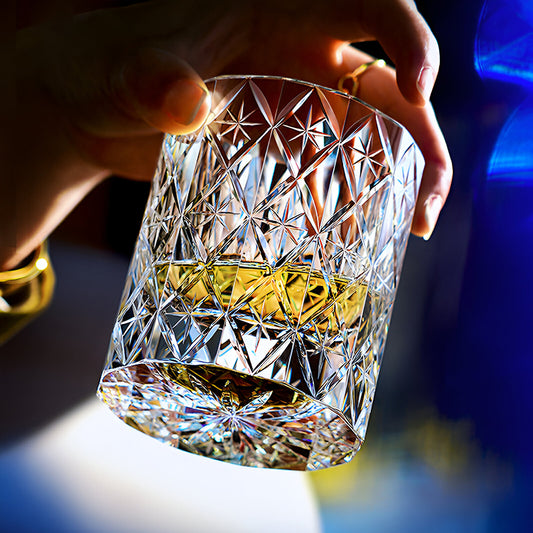
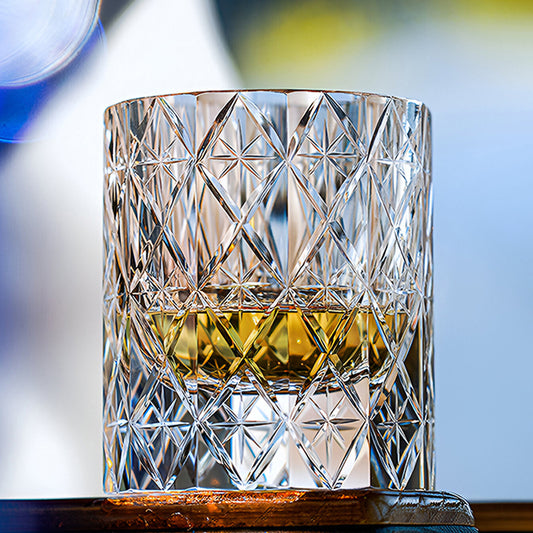
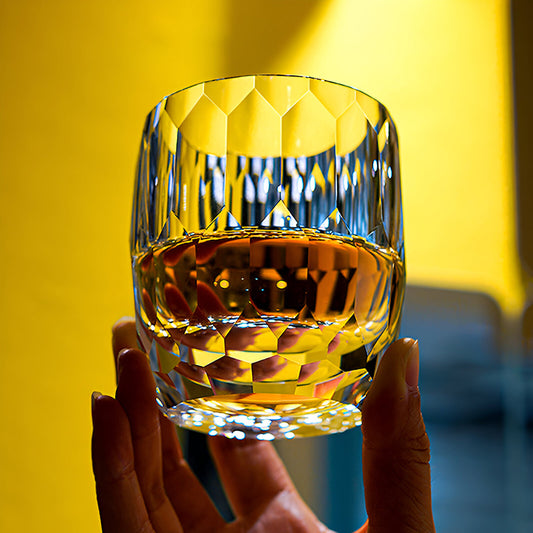
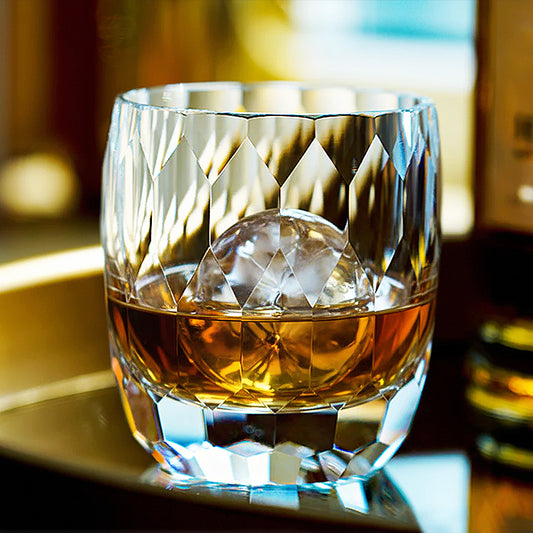
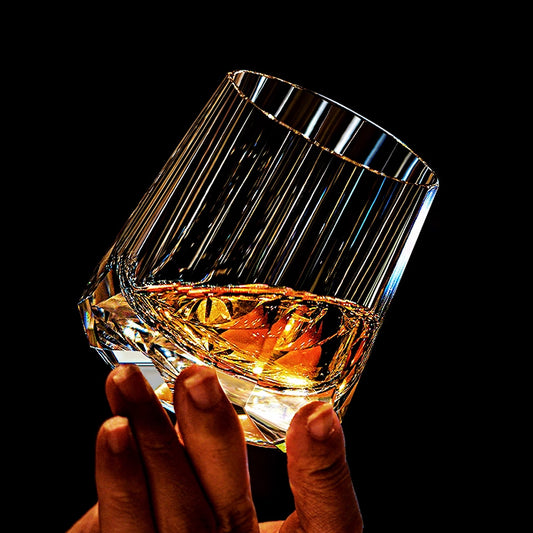
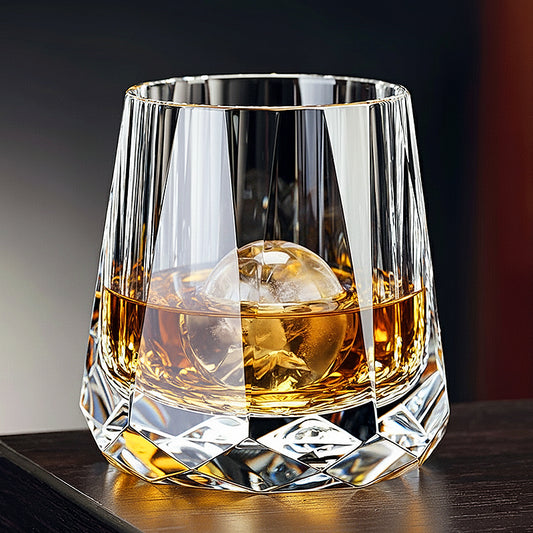
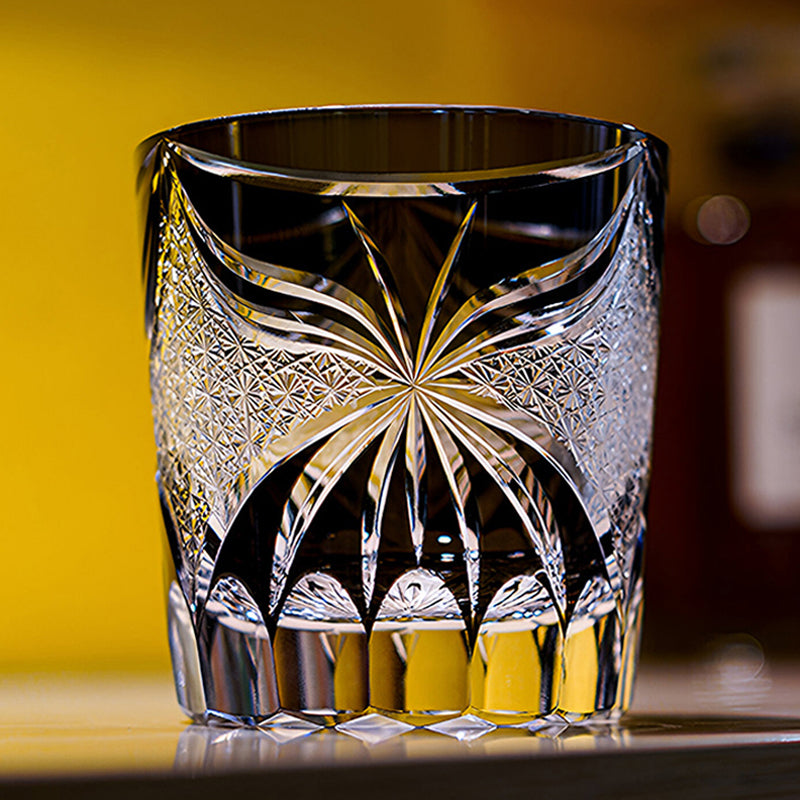
In the Star image at the top of this page, repeated angular lines remain visible across the front, while the amber drink creates a distinct horizontal area. When photographing your own Star whiskey glass, use one repeated pattern section as the focus check. Look for separation between adjacent lines rather than trying to make every reflection disappear.
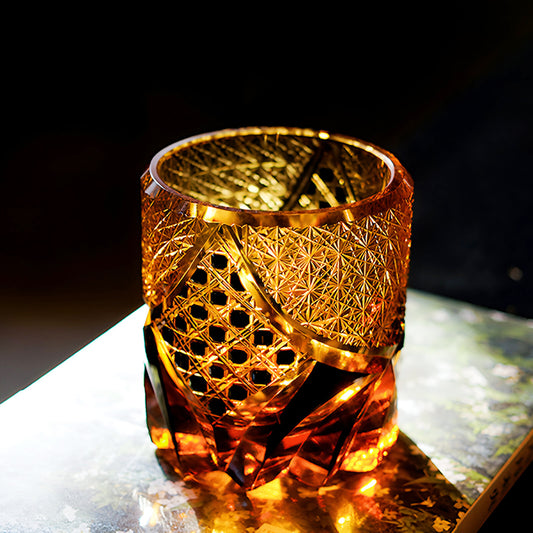
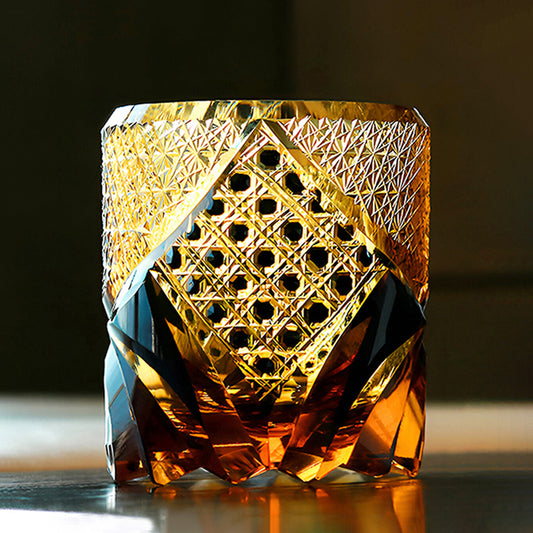
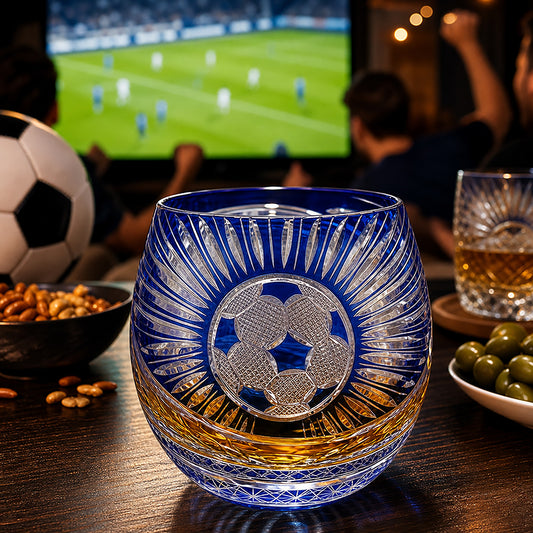
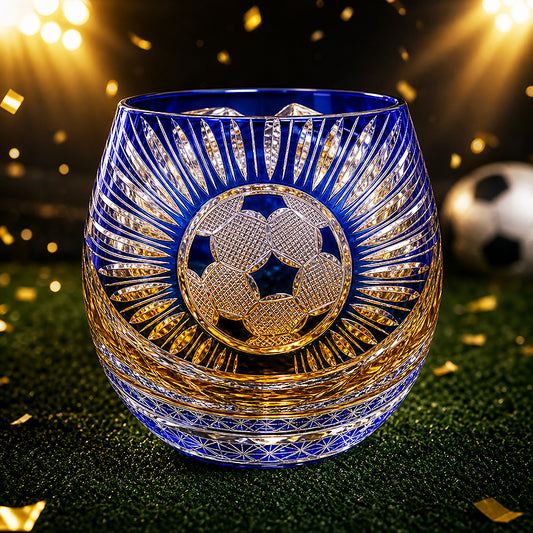
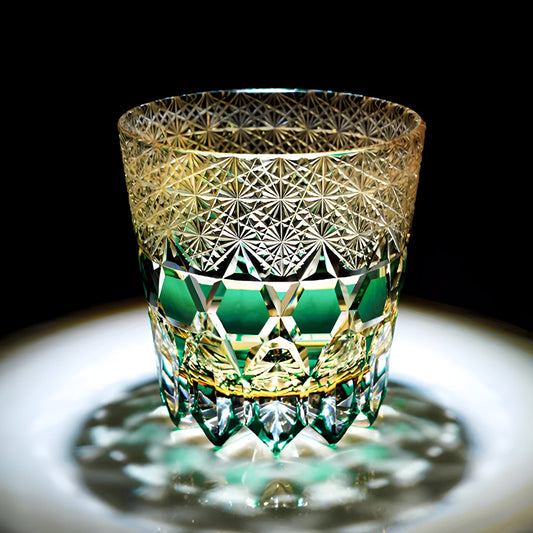
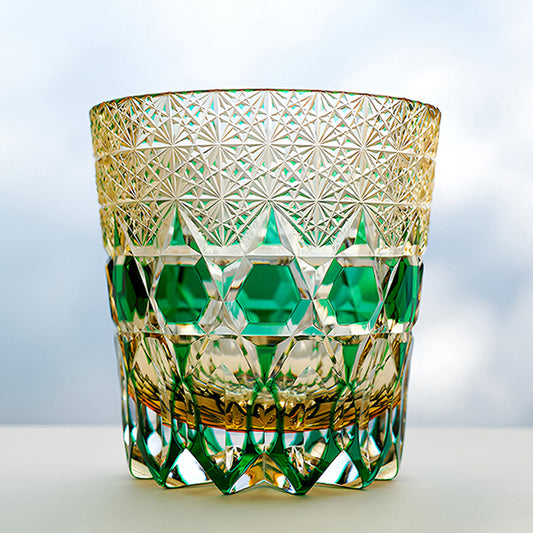
The Butterfly whiskey glass photograph gives you a different focus target: a broad central motif surrounded by smaller detail. For a similar composition, first make the main motif readable, then check that a bright patch has not erased the finer areas. These two images show different designs in different scenes; they are not a controlled lighting comparison or a size comparison.
Take three useful views before changing the setup
| View | Include | Check before saving |
|---|---|---|
| Empty-glass reference | Full outline and front pattern on the table | Rim and base are inside the frame; no major detail is hidden by glare |
| Pattern detail | Main motif plus enough surrounding pattern to place it | Saved image is in focus; close framing has not made the shape misleading |
| Home-bar scene | The glass with your intended drink and a small amount of setting | Props do not block the outline; liquid and reflections do not obscure the chosen detail |
An empty-glass reference helps keep the scene photograph in context. Do not describe an amber reflection or drink as the glass's own color. A photograph also cannot establish capacity, weight, material grade, manufacturing method or origin; use the exact product record for those questions.
Fix the visible problem before adding equipment
- A bright patch covers the motif: try a small change of camera position or glass rotation. Compare the saved frames.
- The outline disappears into the room: simplify what is directly behind it, or try the white card outside the frame.
- The pattern looks soft: refocus on the front detail and steady the phone. If moving closer prevents focus, move back and crop modestly afterward.
- The colors look inconsistent: return to one light source and compare an empty reference. Avoid heavy filters when the photograph is meant to describe the product.
Crop and straighten for presentation, but do not reshape the glass or use generative edits to invent pattern detail. Save the original alongside the edited version. For a replacement inquiry, use the separate replacement-glass identification checklist; a styled scene alone is not an identification record.
Ready to choose a subject for your home bar? Browse Kingwares patterned whiskey glasses, then check the exact product details before choosing.
Sources and scope
Kingwares Editorial Team reviewed the linked Star and Butterfly pages and their original scene photographs on October 28, 2026. The image observations concern only visible composition and pattern. The shooting sequence is editorial guidance informed by the linked Corning photography demonstrations, not a Kingwares camera test. No claim about the original photographer's equipment or lighting setup is made.