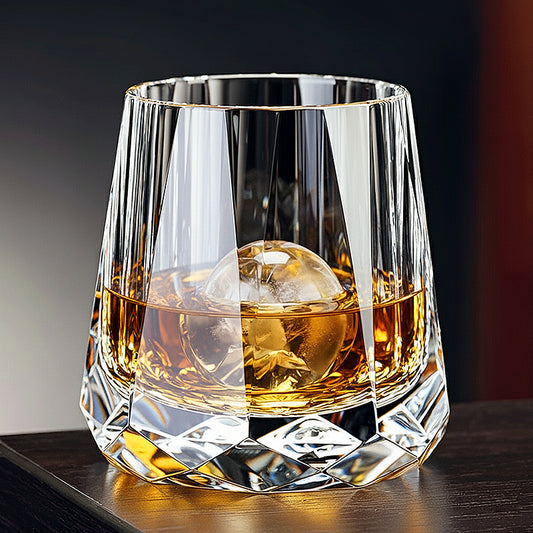

How to Spot Authentic Edo Kiriko Glass: A Connoisseur’s Buying Guide for Whiskey Lovers
If you're pouring a fine Japanese whiskey at your home bar, the glass matters as much as the spirit itself. As a longtime collector of Japanese cut glass, I’ve seen too many people get dazzled by a cheap “Edo-style” tumbler that looks pretty but lacks the soul of true Edo Kiriko glass. Whether you’re gifting a bourbon glass to someone who appreciates craftsmanship or treating yourself to a luxury whiskey glass, knowing how to tell real from fake is essential. Here’s my personal roadmap to spotting authentic Edo Kiriko — from Tokyo’s artisan workshops to your shelf.
Key Takeaways
- Authentic Edo Kiriko is hand-cut by master artisans using lens-cut patterns (kagome, nanako) on lead crystal.
- The most reliable authenticity markers: frosted cuts visible from inside, precision edges with no waviness, a polished pontil mark with signature.
- Beware of machine-pressed “Edo-style” glassware with satin-coated exteriors that mimic frosted cuts.
- Real Edo Kiriko is expensive; a single Japanese whiskey glass can cost $80–$200+.
- Use this guide to perform your own Japanese glass identification before buying online.
What Makes Edo Kiriko Glass Authentic?
To understand Edo Kiriko glass authenticity, you have to go back to 1834 in the Nihonbashi district of Tokyo. That’s where Kagaya Kyubei first applied the techniques of cut glass to lead crystal — launching a tradition that the Japanese government now recognizes as a Traditional Handicraft. Only glass cut in the Tokyo region by certified artisans can legally be called Edo Kiriko, and most of it still comes from small workshops in places like Asakusa and Sumida.
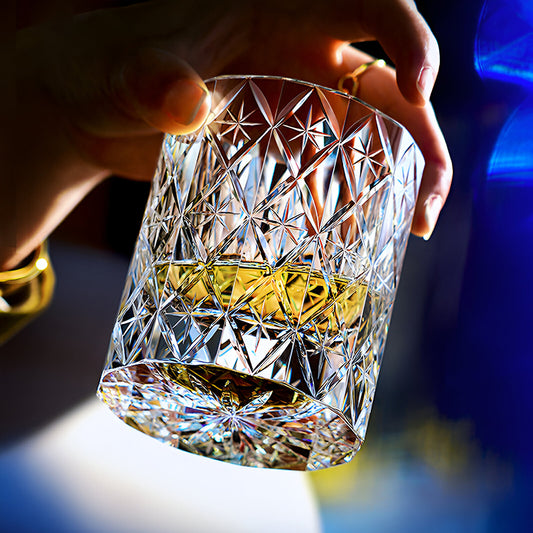
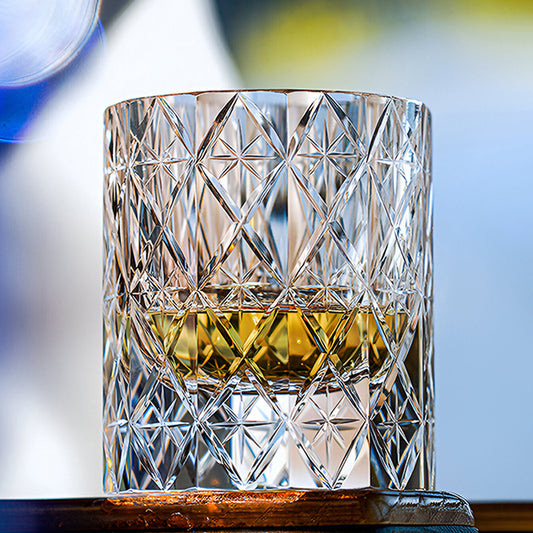
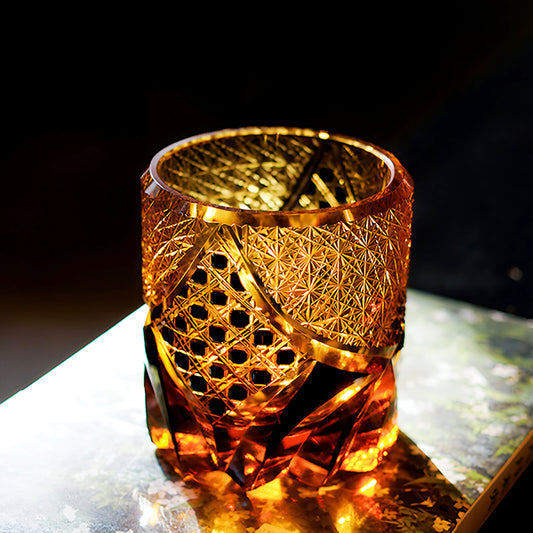
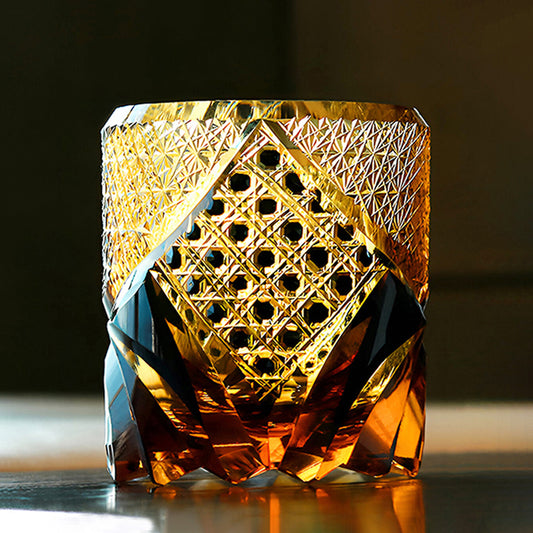
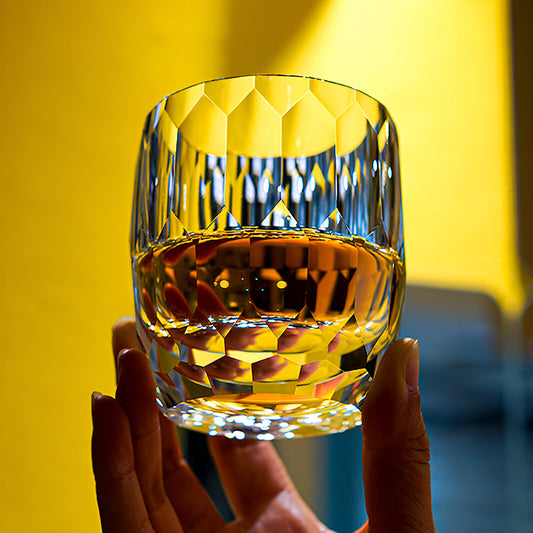
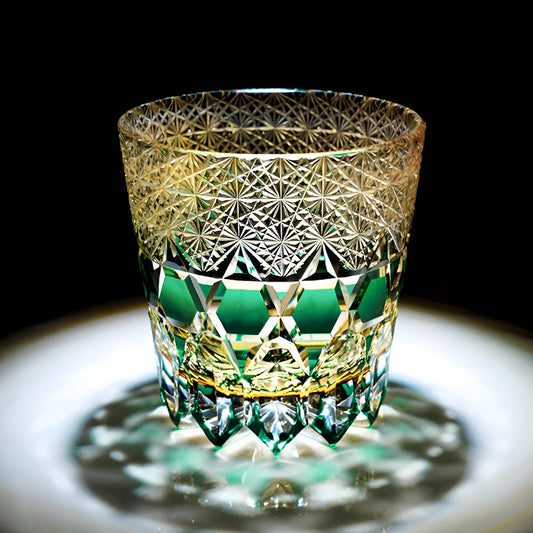
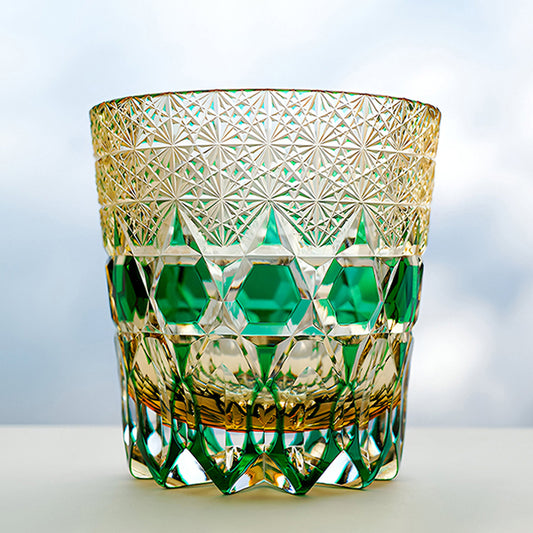
The process is what separates the real from the rest. A master first blows a layer of colored glass (this is called iro-kiriko) over a clear crystal core. Then, using a rotating iron or diamond wheel, they grind intricate patterns — often Japanese cut glass motifs like nanako (fish roe dots), kagome (bamboo lattice), or yusoku (aristocratic designs) — directly into the surface. The friction of the grinding creates a velvety frosted texture on the inside of each cut. That frost isn’t applied or painted; it’s a byproduct of genuine abrasive cutting. When you hold an authentic Edo Kiriko whiskey glass up to the light, you’ll see a crisp, almost icy contrast between the colored exterior and the pure white cuts.
Real Edo Kiriko also relies on true Japanese crystal — specifically lead crystal containing around 24% lead oxide. That’s why it feels noticeably heavy in your hand and emits a clear, musical ring when you gently flick the rim. This weight and clarity become one of the first clues during any serious Japanese glass identification check.
How to Spot Fake Edo Kiriko Glass: 5 Key Warning Signs
Now that you know what to look for in a genuine piece, let’s walk through the red flags I personally use when I’m trying to figure out how to spot fake Edo Kiriko glass. Most fakes circulating in the US market aren’t sold as deliberate forgeries; they’re mass-produced “Edo-style” glasses made in factories, often in China or Southeast Asia, and priced like a steal.
- No real frosting — only a satin coating. This is the biggest giveaway. Rub your finger across the cut area. On an authentic glass, the frosting feels slightly rough and matte, and it’s only on the inner surface of the cuts. Fakes often spray a satin finish or paint the entire exterior to simulate the look, but when you tilt the glass, the cuts won’t show that deep, white brilliance.
- Wavy or dull edges. Hand-cut Edo Kiriko may have tiny, organic variations — that’s part of its charm. But the edges of each cut should still be sharp and clean. Machine-pressed imitations tend to have uniformly soft, rounded contours that lack the crisp line where the cut meets the polished surface.
- Too light for its size. Pick up the glass. Genuine lead crystal has heft. A standard faceted whiskey tumbler in Edo Kiriko style feels substantial, like it wants to stay put on your bar. Cheap soda-lime glass feels almost tinny by comparison — a dead ringer for a fake bourbon glass masquerading as something finer.
- Missing or laser-etched signature. Authentic Edo Kiriko glasses almost always carry an engraved mark on the base. This may be a simple circle with a line (the traditional artisan’s sigil) or the cutter’s name done by hand with a diamond point. Laser-etched marks look too perfect and sit flush with the surface, whereas a hand-engraved signature will have a tactile, slightly irregular depth.
- A price that’s too good to be true. Because each real Edo Kiriko piece requires hours of skilled labor, a single Japanese whiskey glass should cost between $80 and $200, with elaborate Edo Kiriko glass sets climbing well above $500. If you see a pair for $30, you’re almost certainly looking at a fake — no matter how convincing the online photos look.
Real vs Fake Japanese Glassware: A Side-by-Side Comparison
Sometimes it helps to see the differences at a glance. I’ve put together a quick table that sums up what I look for when I’m identifying real vs fake Japanese glassware in the wild — whether at a flea market, a friend’s home bar, or an online listing.
| Feature | Authentic Edo Kiriko Glass | Fake “Edo-style” Glass |
|---|---|---|
| Cut method | Hand-ground with diamond wheel; minor asymmetries | Machine pressed or acid-etched; overly uniform |
| Frosting | Genuinely rough, white cuts with depth | Satin coating, paint, or shallow etching |
| Material | Lead crystal (24% PbO) — heavy, clear, resonant | Soda-lime glass — lightweight, dull ring |
| Base & pontil | Polished concave pontil with hand-engraved signature | Flat machine-made base with no mark or laser mark |
| Price per glass | $80–$200+ | $10–$30 |
How Do You Perform Japanese Glass Identification Like an Expert?
If you want to master Japanese glass identification, start thinking like a craftsman. I always check the same four things, in order:
1. Study the pattern language. Real Edo Kiriko uses traditional motifs that have been passed down for generations. You’ll rarely see a genuine piece with trendy, non-traditional carving. The most common patterns — nanako (thousands of tiny, hand-cut dots), kagome (complex intersecting lines), and yusoku (refined court motifs) — demand meticulous skill. A fake might show a simplified version that looks stamped rather than carved.
2. Look through the glass. Hold it up to a light source. The interior of the cuts should appear bright white because of the micro-abrasions left by the grinding wheel. If the cuts look the same color as the exterior or seem translucent, the frosting is fake. With genuine Japanese crystal, you’ll also notice a subtle rainbow effect thanks to the high refractive index of lead glass.
3. Inspect the rim and the base. The rim of an authentic Edo Kiriko piece is usually fire-polished to a silky smoothness, while a fake might have a slightly sharp or irregular finish. The base is the final tell: a polished concave pontil scar (the spot where the glass was attached to the blowing rod) with a hand-scratched engraving is the gold standard. This is the single most reliable marker of Edo Kiriko glass authenticity.
4. Research the provenance. Who made it? Real Edo Kiriko glass can often be traced to a named workshop or recognized master. Many shops in Tokyo’s Asakusa district (like Kimura Glass or Suga Honten) sell only certified pieces. If you’re buying online, ask the retailer for the workshop’s name or a certificate of authenticity. When I buy from a source I trust, I know I’m getting the real deal — and that peace of mind is part of what you’re paying for.
Why an Authentic Edo Kiriko Glass Makes the Ultimate Bourbon Glass
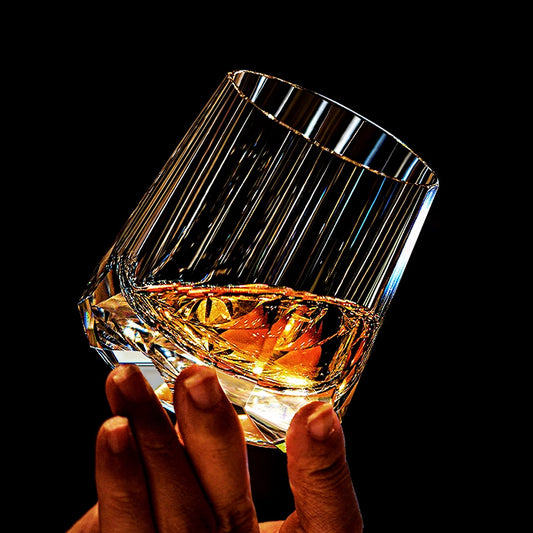
You might wonder why anyone would spend a small fortune on a bourbon glass or whiskey tumbler when there are plenty of cheaper options. For me, it’s about the ritual. When I pour a robust Kentucky bourbon — or a smooth Yamazaki single malt — into a genuine Edo Kiriko tumbler, the weight of the crystal, the way the light fractures through the cuts, and the pure ringing clink of ice cubes turn a simple drink into an experience. It transforms your home bar into a place of quiet luxury.
From a gifting perspective, an authentic Japanese whiskey glass is almost impossible to beat. It’s personal, artful, and carries a story. I’ve given Edo Kiriko glass sets to groomsmen and retired colleagues, and the reaction is always the same: they’ve never held anything quite like it. The blend of Tokyo tradition and everyday use makes it a gift that actually gets used — not relegated to a cabinet.
Where to Buy Authentic Edo Kiriko Whiskey Glasses and Sets
Once you know what to look for, the next step is buying with confidence. If you have the chance to visit Japan, I recommend spending an afternoon in Tokyo’s Asakusa neighborhood. Shops there often let you watch artisans at work, and you can compare several glasses in person. But for most of us in the US, a trusted online specialist is the best route.
When shopping online, always look for detailed descriptions that mention hand-cutting, lead crystal, and specific patterns. Photographs should show close-ups of the frosted cuts and the artisan’s signature on the base. I personally browse crystal whiskey glass sets only from retailers who can name the Tokyo workshop behind each piece. For a wider selection that still maintains authenticity standards, I often explore luxury whiskey glasses that include certified Edo Kiriko alongside other premium Japanese barware.
A genuine luxury whiskey glass should come with proper packaging — usually a wooden box with the artisan’s stamp — and, ideally, a small pamphlet explaining its heritage. If the seller can’t provide any background, move on. In the world of Japanese barware, a great story is almost as valuable as the glass itself.
Who Should Buy an Authentic Edo Kiriko Glass?
I often get asked whether an expensive Japanese whiskey glass is “worth it.” My answer always comes down to who you are and what you value. Here’s who I think will appreciate it most:
- The whiskey or bourbon enthusiast who notices the nuances of aroma and texture. A properly cut crystal tumbler elevates the entire drinking experience — and makes a great conversation piece when you’re hosting a tasting.
- The thoughtful gift-giver looking for a milestone present. An Edo Kiriko glass set works beautifully for a 30th birthday, a promotion, a wedding, or a retirement. It says “I value craftsmanship as much as I value you.”
- The home bartender building a curated Japanese barware collection. If you’ve already invested in a good decanter, a mixing glass, and a quality jigger, a pair of genuine Edo Kiriko tumblers is the logical final touch.
- The culture-minded collector fascinated by Japan’s living traditions. Edo Kiriko lets you hold a piece of Tokyo history in your hand every evening — a rare blend of art and daily ritual.
Final Sip: Trust Your Eyes — and Your Hands
I’ve been burned by fake Edo Kiriko before, and I know how disheartening it feels to unwrap a box and find a glass that just doesn’t sing. But with a little practice, spotting the real thing becomes second nature. Remember the keys: genuine frosting you can feel, a heavy lead-crystal body, a hand-engraved signature, and a price that reflects hours of skilled labor.
The next time you pour a dram of Yamazaki or a splash of Blanton’s, make sure it’s into a glass worthy of its heritage. Use this guide to cut through the noise, and when you’re ready to buy, start with a trusted source that can prove provenance. I’d always recommend you browse crystal whiskey glass sets that come directly from Tokyo workshops, or explore luxury whiskey glasses curated for authenticity. Your home bar deserves the real thing — and now you know exactly how to find it.
Explore Our Collection
Ready to experience the world of Edo Kiriko glass? Browse our curated collection:
Disclaimer: This article is for informational purposes. Products and pricing subject to change.