Why Is Edo Kiriko So Expensive? The Art, Labor, and Luxury Behind Japanese Cut Crystal

Yes, Edo Kiriko is expensive—but not because of hype. A single hand-cut whiskey tumbler can cost between $80 and $300, with showpieces reaching four figures. The price reflects decades of master-level training, material purity, and stunningly slow, technique-driven craftsmanship. Think of it like buying a mechanical Rolex or a piece from a fine art gallery; you’re paying for imperfect perfection that will outlast you.
Key Takeaways
- Edo Kiriko’s cost comes from intensive hand-cutting by artisans with 20+ years of experience.
- Each piece is unique—no two glasses refract light identically.
- Raw material is high-lead crystal or ultra-clear Japanese soda glass, far superior to ordinary glass.
- When compared to European luxury crystal (Waterford, Baccarat), Edo Kiriko offers a different aesthetic: precise geometry meets Japanese minimalism.
- It’s an heirloom purchase that elevates everyday rituals and dinner party presentations.
What Is Edo Kiriko?
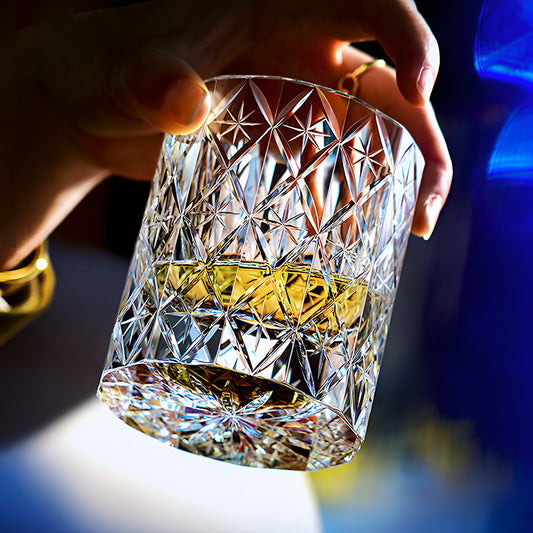
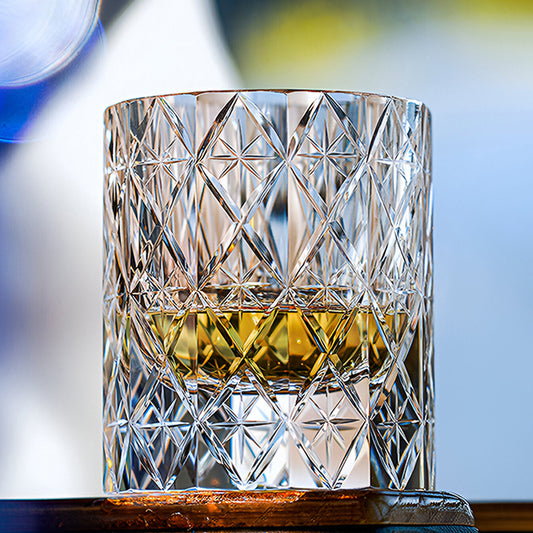
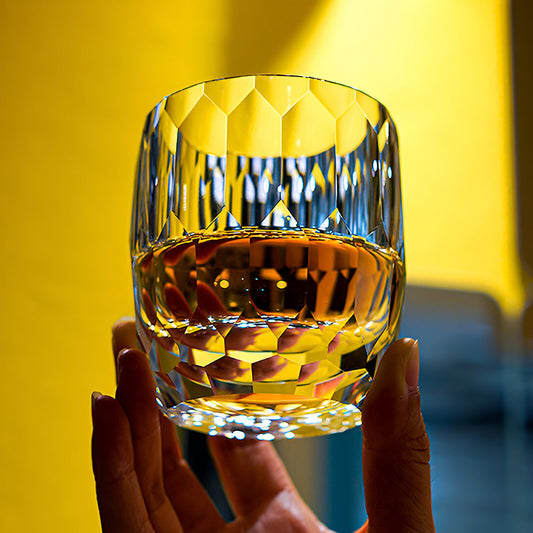
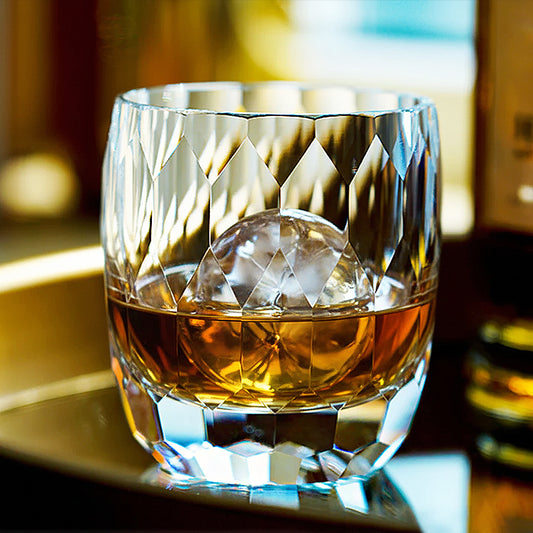
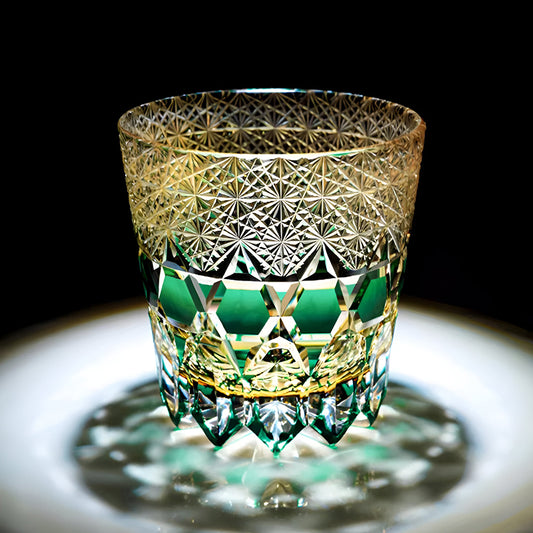
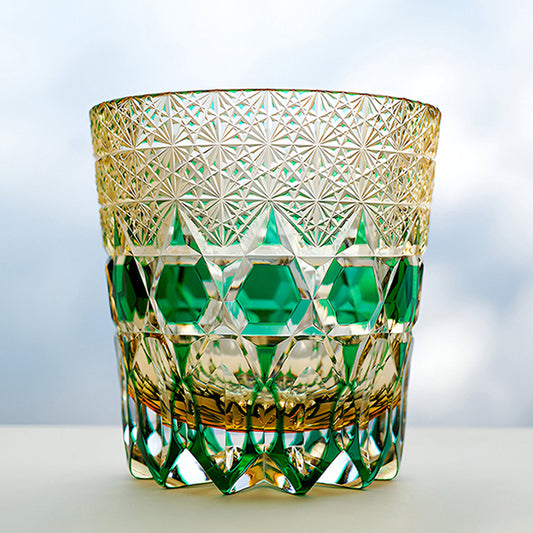
Edo Kiriko (江戸切子) is a traditional Japanese cut-glass technique that originated in Tokyo (formerly Edo) during the late Edo period, around 1834. Artisans use grinding wheels to incise intricate patterns—often inspired by nature like chrysanthemums, bamboo, or hemp leaves—directly into the surface of crystal or glass. The result is a kaleidoscope of light and shadow that transforms a simple drink into a visual experience.
While many cultures produce cut glass, Edo Kiriko is distinguished by its kireji (切子)—the crisp, exceptionally clean incision lines—and the way it balances negative space. It’s not just decorative; it’s a meditation on form and transparency.
Why Edo Kiriko Matters: More Than Just a Glass
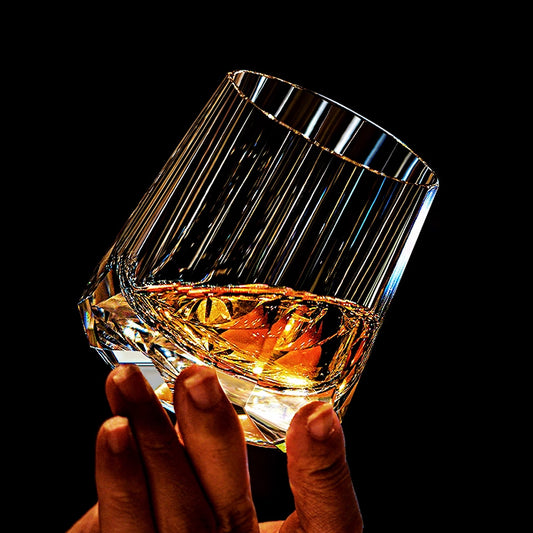
In the U.S., we often view glassware as functional: get the job done, maybe match a set. Edo Kiriko flips that script. It turns a whiskey neat or a pour of sake into an art encounter. When you lift the glass, the faceted cuts cast tiny rainbows across the table. It’s a conversation starter, a tactile sculpture, and a daily reminder to slow down.
For premium lifestyle buyers, owning Edo Kiriko signals an appreciation for intangible value—the way an Audemars Piguet watch does, or a handmade Japanese kitchen knife. It’s a quiet flex that says, “I invest in things that are made, not manufactured.”
The Craft: Why Edo Kiriko Commands Its Price
Hand-Cutting: A Master’s Touch
No CNC machine, no laser. Each groove is carved by a human hand guiding a rotating grinding wheel, often made of natural stone or diamond. The artisan must maintain constant pressure and angle. One tremor and the glass is ruined. Mastery takes 10 to 20 years, and the number of living officially recognized Traditional Craftsmen is under 100 in Japan. Their scarcity alone drives value.
Time Is Literally Money
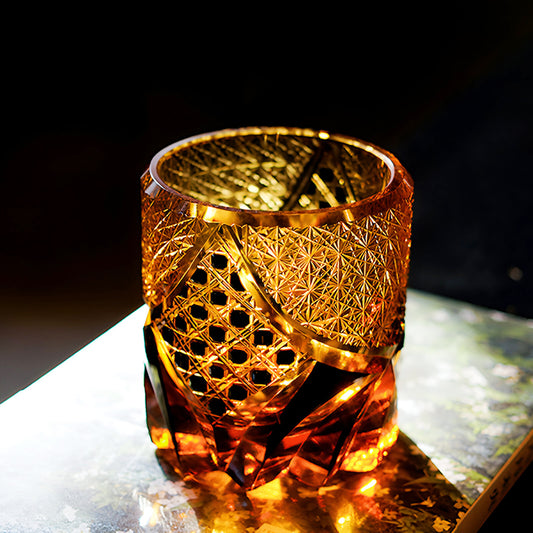
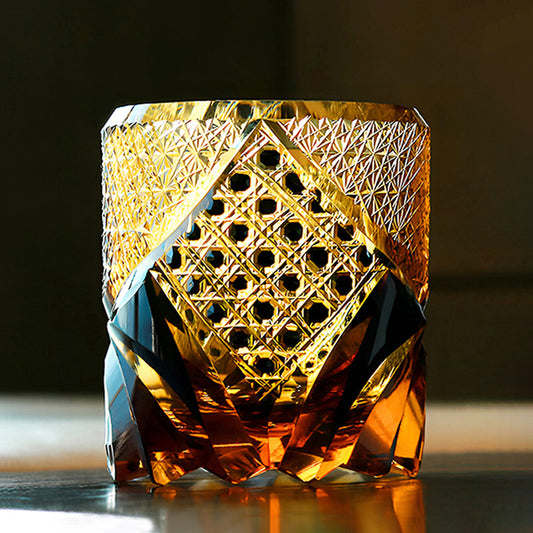
A single whiskey tumbler with a classic nanako (fish roe) pattern can demand 4 to 8 hours of continuous cutting. Complex pieces with multiple pattern zones (like the Peacock pattern found in KingWares’ collection) may take over 10 hours. No assembly line. One person, one wheel, one glass at a time. Compare that to machine-blown and laser-cut crystal that takes minutes—that delta is why you pay more.
Rarity: Not Mass-Produced
Edo Kiriko workshops are tiny, often family-run affairs. They produce limited batches. Some patterns are exclusive to certain ateliers. If you buy an Edo Kiriko glass today, you’re unlikely to find an identical copy a year later. This artificial, skill-based scarcity means value often holds or increases over time, unlike department-store crystal that can be found on clearance.
Material: Premium Crystal, Deliberately Chosen
Artisans use high-lead glass (often 24% lead oxide, similar to Waterford’s classic crystal recipe) or exceptionally pure soda glass. Lead crystal offers higher refractive index—more sparkle—and a heavier, luxurious feel. Soda glass is lead-free, preferred for sipping spirits delicately. Both are far more expensive than standard lime glass cups. KingWares selects only optically clear, stress-tested blanks from Japanese suppliers to ensure clarity and safety.
Key Benefits of Owning Edo Kiriko
- Unique Aesthetic: No two glasses catch light the same way. It’s functional art.
- Enhanced Drinking Ritual: The weight, the sound of ice clinking the cuts, the visual ballet—turns a Tuesday evening into a ceremony.
- Conversation Lifter: Guests immediately ask, “Where did you get this?” It’s a story in glass.
- Investment Grade: Well-maintained pieces appreciate as master artisans retire and patterns become extinct.
- Versatility: While designed for whiskey and spirits, Edo Kiriko doubles as an elegant water glass, dessert vessel, or decorative object.
How Edo Kiriko Compares to Other Luxury Glassware
Use this table to see where your dollars go. Think of it like comparing a bespoke suit to off-the-rack.
| Feature | Edo Kiriko (KingWares) | European Crystal (Waterford) | Machine-Cut Crystal | Typical Glass Tumbler |
|---|---|---|---|---|
| Crafting Method | Purely hand-cut on wheel | Mix of hand/mouth-blown, some machine | Laser/CNC cutting | Mold-blown, no cuts |
| Time per Piece | 4–12+ hours | 2–6 hours (high-end lines) | Under 30 minutes | Seconds |
| Uniqueness | Fully unique micro-patterns | Standardized patterns, slight variation | Identical pieces | Mass interchangeable |
| Light Refraction | Superb, deep 3D effect | Excellent, traditional sparkle | Good, but flat by comparison | Minimal |
| Price Range (Tumbler) | $90–$350+ | $50–$150 | $15–$40 | $3–$10 |
| Cultural Story | Strong, centuries-old Japanese art | Irish/European heritage | Modern mass manufacturing | None |
American analogy: Edo Kiriko is to a Solo Stove fire pit as a standard tumbler is to a generic party cup. Both hold liquid; one transforms the experience.
Real-Life Scenarios: When Edo Kiriko Shines
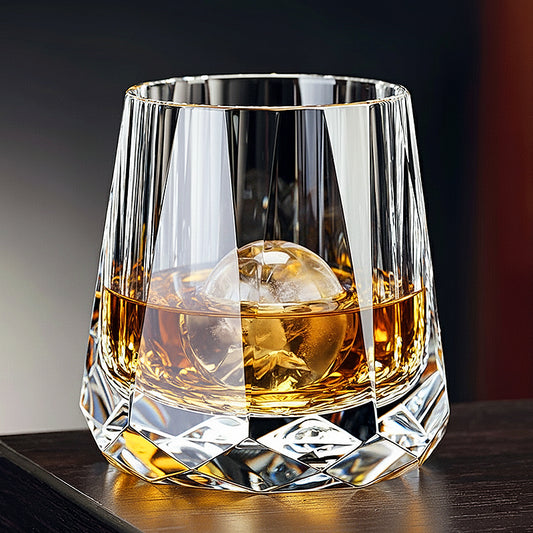
The Milestone Toast: You just closed a big deal or celebrated a 40th birthday. Pour a Yamazaki 18 into an Edo Kiriko tumbler. The amber liquid dances against the cuts, and the moment gains weight. It’s the difference between popping champagne in a plastic flute versus a Baccarat coupe.
The Dinner Party Statement: Set each place with an Edo Kiriko water glass—or as a sake cup for a Japanese-themed evening. Guests will photograph the table before they eat. The glasses become part of the decor.
The Mindful Solitude Ritual: At the end of a long day, you pour yourself a single malt. You hold the heavy crystal, feel the cool patterns against your fingertips, watch the light fragment. It’s a 15-minute meditation you can sip.
Buying Guide: How to Choose an Authentic Edo Kiriko
With growing interest, imitations appear. Keep these in mind:
- Look for the “Kireji” crispness: Real hand-cut incisions are sharp and reflective inside; machine cuts often have a slightly rounded or frosted bottom.
- Check the weight and ring: Good crystal feels dense and produces a sustained, bell-like tone when gently tapped. Thin, cheap glass clunks.
- Ask about the artisan or workshop: Legitimate sellers, like KingWares, can name the atelier or master. A generic “Japan-made” sticker is a red flag.
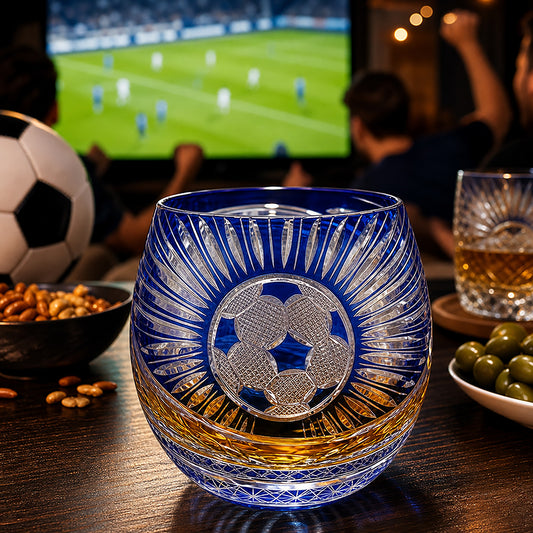
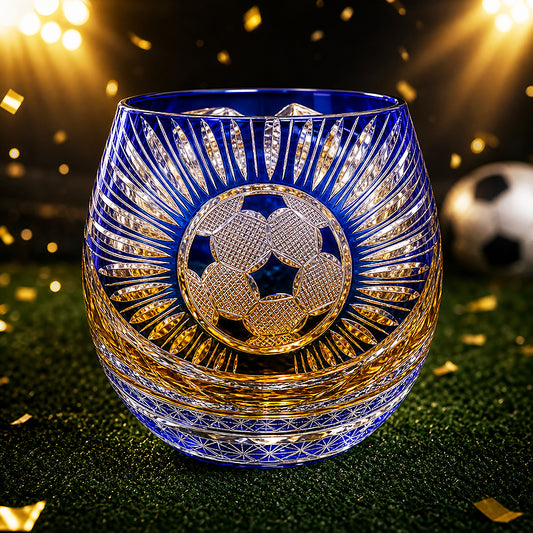
- Start with a classic pattern: The Peacock (Kujaku) is iconic—KingWares’ Peacock series offers a dramatic spokes-of- light design that’s a benchmark of the craft.
- Buy from curated sources: Specialist importers remove the guesswork. Avoid marketplace listings with stock photos and impossibly low prices ($20–$40 for a “hand-cut” glass is a dead giveaway).
Care Tips to Preserve Your Investment
Hand-cut crystal is not dishwasher-safe. The high heat, aggressive detergents, and vibration can dull the sharp edges and cause clouding over time.
- Hand wash only: Use lukewarm water, a mild detergent, and your hands or a soft microfiber cloth. No abrasive scrubbers.
- Hold carefully: Wash one piece at a time; don’t stack them in a sink.
- Dry immediately: Use a lint-free cloth to prevent water spots from masking the cuts’ brilliance.
- Store with respect: Keep glasses upright in a cabinet, separated, maybe on a soft-lined coaster. If you must stack, place a felt pad between them.
- Avoid thermal shock: Don’t pour boiling liquids into a cold crystal glass, or add ice to a sun-heated glass. Sudden temperature change can crack it.
FAQ
Why is Edo Kiriko so much more expensive than normal whiskey glasses?
Because you’re paying for a master artisan’s labor—often an entire workday per glass—plus high-grade crystal and rarity. It’s the same reason a hand-stitched leather bag costs more than a factory-sewn one.
How can I tell if my Edo Kiriko is real hand-cut or fake?
Look for sharp, internal reflections within the cuts, slight irregularities (proof of human touch), and a heavy, ring-like sound when tapped. Machine cuts are too uniform and lack depth.
Is Edo Kiriko only for whiskey?
Not at all. While beloved by whiskey drinkers for its nosing and aesthetic qualities, you can use it for water, iced tea, sake, cocktails, or even as a small vase. It’s a multi-sensory experience.
Does KingWares’ Edo Kiriko hold its value over time?
Yes. As traditional artisans retire and certain patterns become rare, well-kept pieces can appreciate on secondary markets. More importantly, they hold enduring personal value as heirlooms.
What if a pattern goes out of stock at KingWares?
Because each batch is limited, once a pattern run sells out, it may never return in exactly the same form. This scarcity model echoes Japanese philosophy of ichi-go ichi-e (one time, one meeting), making each purchase even more special.
Who Should Buy Edo Kiriko?
You should consider buying if:
- You’ve graduated from “just a drink” to “a ritual.”
- You value Japanese craftsmanship and want a tangible piece of Tokyo heritage.
- You’re looking for a milestone gift (retirement, wedding, college graduation) that isn’t a watch or a pen.
- You enjoy hosting and want table elements that spark genuine conversation.
- You appreciate that true luxury is slow, intentional, and irreplicable.
Conclusion: An Heirloom in Your Hands
Edo Kiriko’s price tag is not a sticker shock waiting to happen—it’s an invitation to understand value on a deeper level. In a world of instant everything, a hand-cut crystal glass demands patience, rewards attention, and ages with grace. It’s the difference between owning a thing and stewarding a tiny work of art.
If you’re ready to experience that difference, explore the curated KingWares Edo Kiriko collection. Each piece carries the soul of a master artisan and the promise of a thousand light-filled evenings. Use code KIRIKO10 at checkout for 10% off your first acquisition.